Residential Landscape Installation
What Goes Into a Residential Landscape Installation
Greener Lawnscapes • September 2026 • Bryan / College Station, TX • 7 min read
Short Answer: A residential landscape installation is the process of turning a bare, tired, or unfinished yard into a designed, finished outdoor space. It typically starts with a design that fits your home, your yard, and how you want to use it, then moves through site prep and grading, installing any hardscape like paths, borders, and stone features, planting trees, shrubs, and plants suited to our Central Texas climate, and finishing with mulch, rock, or decomposed granite. Done well, it not only makes your yard beautiful and low-maintenance but also handles drainage, adds usable space, and boosts your home's value. It is a real project, and the design and groundwork are what make the result last.
A great landscape does not just happen. The beautiful, finished yards you see, the ones with clean beds, stone paths, native plants, and not a weed in sight, are the result of a real installation process with a lot of planning and work behind them. If you are thinking about transforming your yard, it helps to understand what actually goes into a residential landscape installation.
At Greener Lawnscapes, we design and install landscapes for homeowners across Bryan, College Station, and the Brazos Valley. Here is a look at what the process involves and why each step matters to the final result.
It Starts With a Design
Every good landscape installation begins with a plan. Before any plants go in the ground or stone is set, a design is created that fits your home's style, your yard's conditions, and how you actually want to use the space. This is where your goals, whether that is low maintenance, curb appeal, a place to entertain, or drought-tolerant beauty, get turned into a real layout.
A thoughtful design considers sun and shade, drainage, the architecture of your home, and the way you move through and use the yard. It maps out where beds, paths, features, and plantings go, so the finished landscape feels intentional and cohesive rather than piecemeal. Skipping or shortcutting the design is how yards end up looking like a collection of random plants, so this first step shapes everything that follows.
Site Prep and Grading
With a design in hand, the physical work starts with preparing the site. That means clearing out old, overgrown, or dead material, removing weeds, and getting the yard down to a clean slate ready to build on. It is not glamorous, but a proper clearing is what a lasting landscape is built on.
Grading is a key part of this stage, and it is easy to underestimate. Shaping the ground so water drains correctly, away from your home and away from spots where it would pool, protects both your landscape and your foundation. In our area, where heavy downpours are part of life, getting drainage right during installation prevents soggy beds, eroded areas, and water problems down the road. The groundwork under a landscape is a big part of why it lasts.
Hardscape: The Bones of the Landscape
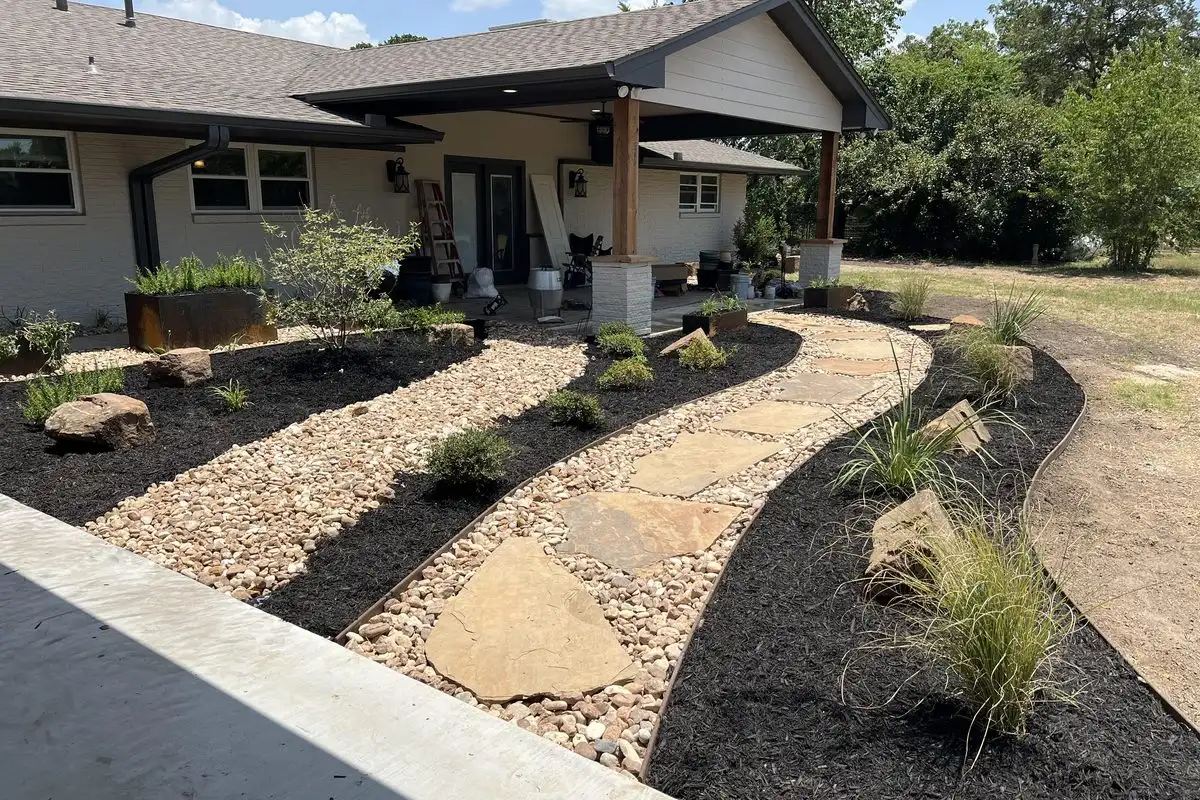
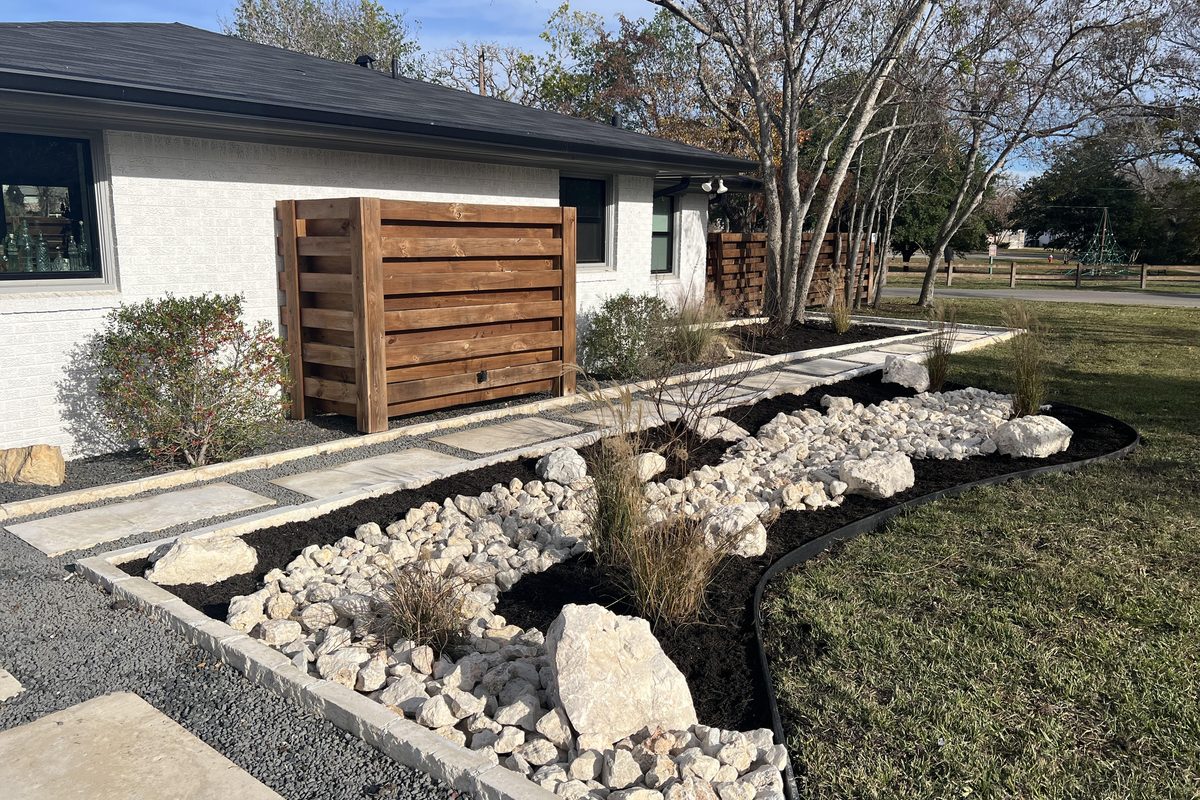
Hardscape refers to the non-plant elements, the stone, paths, borders, edging, and features that give a landscape its structure. Installing these is often the next step, because they form the framework that the plantings fill in around. Think flagstone or paver walkways, stone borders, decorative rock, boulders, retaining features, and clean edging that separates beds from lawn.
These elements do a lot of work in a landscape. They create paths and definition, add year-round structure that looks good even when plants are dormant, and in Central Texas they are central to the popular xeriscape look, where rock, stone, and decomposed granite reduce the amount of thirsty lawn. Well-installed hardscape is the backbone that makes a landscape feel finished and holds up for years.
Planting for Our Climate
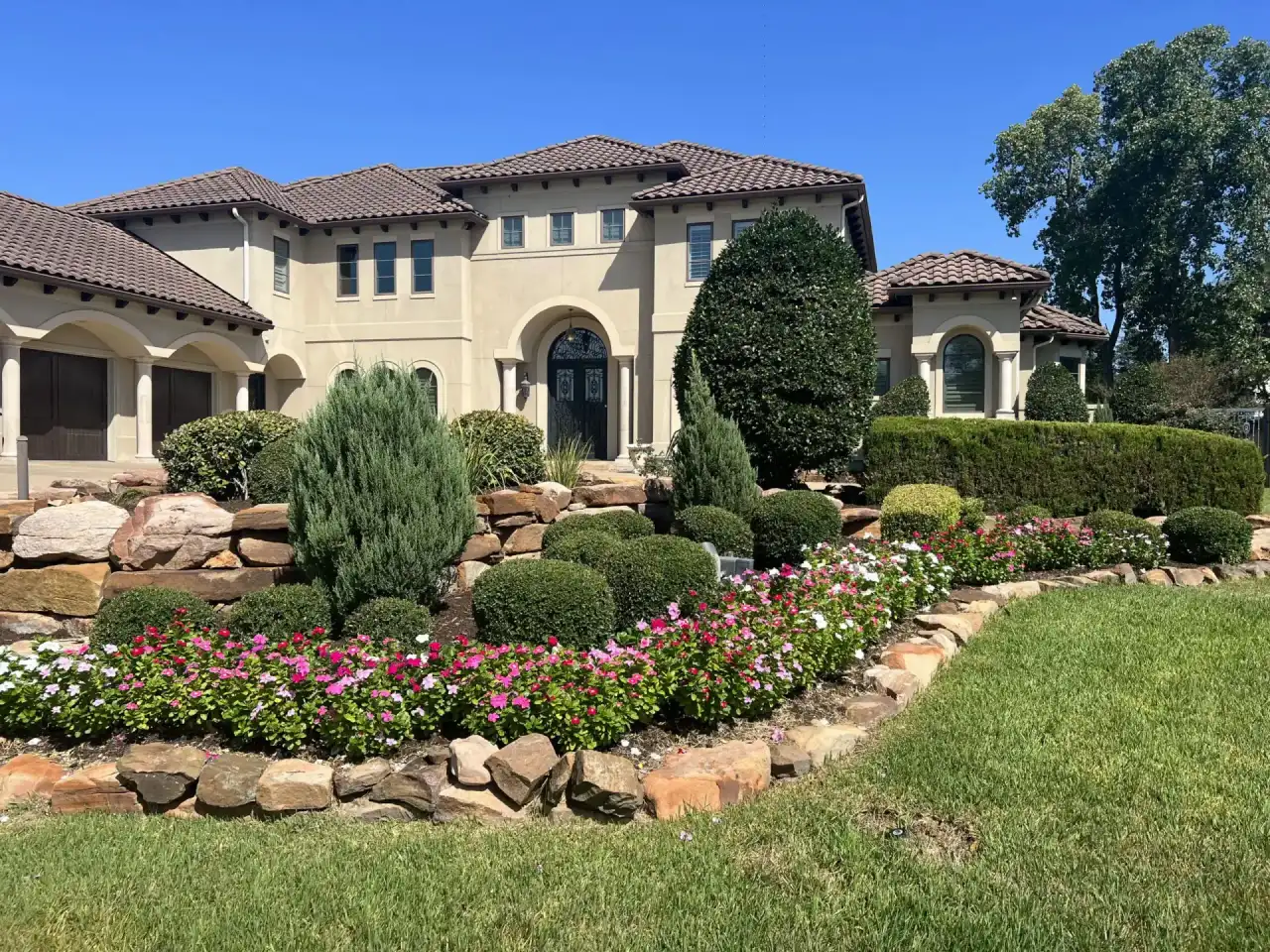
With the structure in place, the plantings go in, and this is where plant selection really matters. The trees, shrubs, grasses, and plants should be chosen to thrive in our Central Texas climate, which means favoring drought-tolerant and native or adapted species that can handle our heat, our soils, and our water conditions. The right plants flourish with less fuss, while the wrong ones struggle no matter how well they are installed.
Good planting is about more than picking pretty plants, too. It considers mature size, sun and shade, how plants group together, and how the landscape will look across the seasons. Placing the right plant in the right spot is what lets a landscape fill in beautifully and stay healthy, rather than becoming a maintenance headache or a patchwork of struggling plants. This is a big part of the value professional design brings.
The Finishing Touches
The final stage is what pulls everything together: mulch, rock, and ground cover. Beds are topped with mulch or decorative rock, which looks clean and finished while also serving real purposes, holding moisture in the soil, suppressing weeds, and protecting plant roots. Decomposed granite or gravel may go into paths and low-water areas.
These finishing touches are what give a fresh installation that crisp, complete look, and they are functional as well as attractive. Mulch and rock cut down on watering and weeding, which keeps the landscape lower maintenance over time. When the finishing layer goes down and the beds are edged clean, the yard transforms from a work in progress into a finished landscape you can be proud of.
Why It Is Worth Doing Right
A landscape installation is an investment, and like the sod or hardscape under it, the result depends on doing each step well. The design, the grading, the hardscape, the plant selection, and the finishing all have to come together, and cutting corners on any of them shows up later as poor drainage, struggling plants, or a yard that never quite looks finished. It is a lot more involved than planting a few things and spreading mulch.
That is exactly what professional design and installation bring: the planning, the groundwork, and the plant knowledge that turn a vision into a landscape that lasts and looks great with reasonable upkeep. For a project that adds real beauty and value to your home, getting it done right the first time is well worth it.
How Long It Takes and What to Expect
A common question is how long a landscape installation takes, and the honest answer is that it depends on the scope. A focused project like refreshing the front beds might take a few days, while a full-yard transformation with grading, hardscape, and extensive planting can run longer. The design and site conditions drive the timeline, and a good installer will walk you through what to expect before the work starts.
During the installation itself, your yard will look like a work in progress, with materials staged, ground being worked, and plants waiting to go in. That is normal and temporary. A professional crew works in a logical sequence, prep and grading first, then hardscape, then planting and finishing, so the yard comes together in an order that makes sense and protects the work already done. Knowing the process is underway in stages makes the mid-project look easier to understand.
Caring for a New Landscape
Once your landscape is installed, a little care in the early weeks helps everything establish. New plantings need appropriate watering while their roots take hold, and following the watering guidance for your specific plants is the most important thing you can do. Established, drought-tolerant plants will need far less over time, but the establishment period matters for getting them off to a strong start.
Beyond watering, a new landscape benefits from light, regular attention: keeping beds tidy, refreshing mulch as needed over time, and addressing any weeds before they take hold. One of the advantages of a well-designed landscape, especially a lower-water, rock-and-native design, is that this upkeep is modest compared to a demanding lawn. A bit of care early on protects your investment and lets the landscape grow into its full, intended look.
What to Do Next
If you are ready to transform your yard, understand that a great landscape is built through a real process: design, site prep and grading, hardscape, climate-right plantings, and finishing touches, each one shaping the result. Done well, it gives you a beautiful, lower-maintenance, higher-value outdoor space. The best next step is a conversation about your yard and what you want it to become.
At Greener Lawnscapes, we design and install residential landscapes for homeowners across Bryan, College Station, and the Brazos Valley. If you are ready to turn your yard into something you are proud of and love to spend time in, we are here for that. Call us at 979-705-9545 or visit greenerlawnscapes.com, and we will walk your property, talk through your vision, and put together a plan.