Landscaping
What Landscape Design and Installation Costs in Bryan and College Station
Greener LawnScapes • September 2026 • Bryan / College Station, TX • 7 min read
Short Answer: Across the Brazos Valley, a front yard refresh with beds, plants, and mulch typically runs $3,000 to $8,000. A larger planting plan covering front and back with irrigation adjustments generally lands between $8,000 and $20,000. Add hardscape and the number moves considerably: a paver patio commonly runs $18 to $35 per square foot installed, and retaining walls run higher depending on height and engineering. Design work itself is often $500 to $2,500 and is frequently credited against installation. The largest single variable is hardscape square footage, which is why two projects on similar lots can differ by a factor of five.
If you are reading this, you are probably trying to work out whether the project in your head is a five thousand dollar project or a thirty thousand dollar one. That is a completely reasonable question and our industry is generally terrible at answering it, because everybody is afraid of scaring people off with a number.
We would rather you know. Here is how landscape pricing is actually built in this market, and where the money goes.
The Ranges We See Here
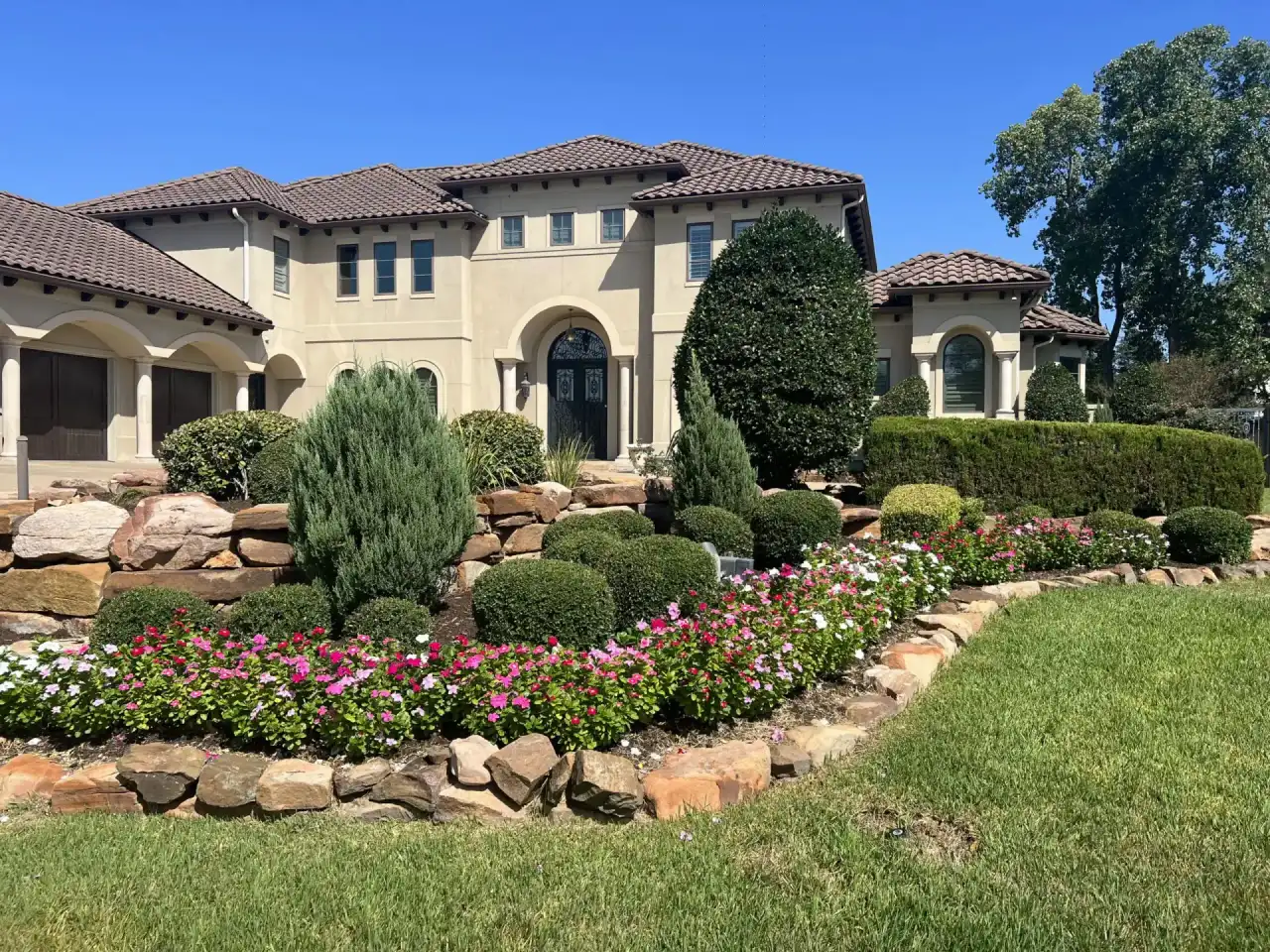
A front yard refresh, meaning new bed lines, soil preparation, a proper planting plan, and mulch, generally runs $3,000 to $8,000 on a typical Bryan or College Station lot. This is the most common project we do and it changes the look of a house more than homeowners expect for the money.
A whole property planting plan, front and back, with bed construction, trees, shrubs, perennials, and the irrigation adjustments to support them, usually falls between $8,000 and $20,000.
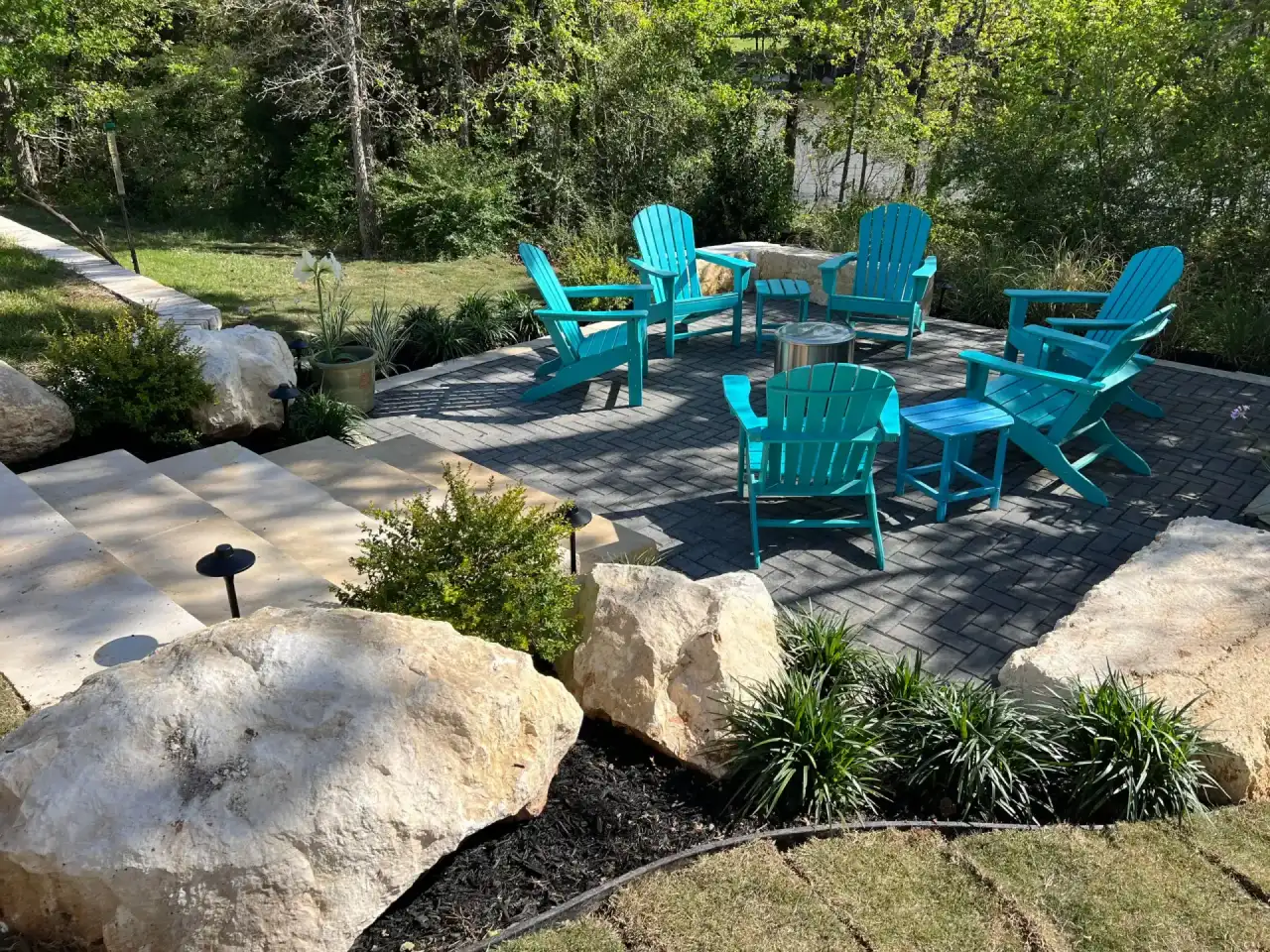
Hardscape is where budgets expand. A paver patio typically runs $18 to $35 per square foot installed, depending on the paver, the base requirements, and how much cutting the shape demands. Concrete is often less; natural stone is often more. Retaining walls vary enormously with height, because anything substantial needs proper engineering, drainage behind it, and sometimes a permit.
Landscape lighting on a typical residential project generally runs $2,500 to $6,000 for a meaningful installation, and it is consistently the item homeowners tell us afterwards they wish they had done sooner.
These are Brazos Valley ranges rather than a quote. Every one of them moves with site conditions.
Why Design Is Charged Separately
This surprises people, so here is the reasoning.
A design is real work. Site measurement, understanding drainage and sun exposure, plant selection suited to our soil and heat, a drawn plan, and revisions. Depending on scope, that generally runs $500 to $2,500 here, and many firms including us commonly credit some or all of it toward installation if you build the plan.
The reason it exists as a line item is that a design has value on its own. You own it. You can phase it over three years, build it yourself, or take it to another contractor. Companies that give away design tend to build the cost into inflated installation prices, which is fine until you decide not to build.
If someone offers a free design and a same day price, ask how long they spent on your property. The answer is usually a short walk and a template.
Where the Money Actually Goes
Homeowners generally assume plants are the expensive part. On most projects they are not.
Labor and site preparation dominate. Excavation, hauling spoil away, bringing in base material, compaction, soil amendment, and edging are unglamorous and account for a large share of the invoice. Nobody photographs the base under a patio, and the base is what determines whether the patio is still level in ten years.
Access changes the number more than people expect. If a skid steer can reach your back yard, material moves quickly. If everything has to come through a 36 inch gate by wheelbarrow, the same work can take twice as long. Mention your gate width when you ask for a quote.
Our Brazos Valley clay is its own line item. It compacts hard, drains slowly, and often needs genuine amendment or raised beds rather than a bag of compost tossed in a hole. Any plan that ignores the soil is a plan that produces replacements in year three.
Where Budgets Go Further Than Expected
Not everything worth doing is expensive, and we would rather point you at the high leverage items.
Bed lines and edging change how a property reads more than plant choice does. Clean, generous, curved beds with proper steel or masonry edging make an ordinary planting look deliberate. It is relatively cheap and it is the single biggest visual return in landscaping.
Mulch, done properly and topped up annually, improves soil, conserves water, suppresses weeds, and makes everything look finished. It is the least expensive thing on any estimate.
Buying smaller plants is genuinely reasonable in this climate. A three gallon shrub costs a fraction of a fifteen gallon one and often catches up within a few seasons, because smaller root systems establish faster. Spend the money on trees, where size actually matters to the design, and go smaller on the shrub layer.
Phasing Instead of Postponing
Most projects we do are phased, and we think that is usually the right call.
The order matters, though. Drainage and grading go first because everything else sits on top of them. Hardscape next, because heavy equipment destroys finished planting. Irrigation after that. Planting and turf last.
What you should not do is install the pretty parts first and the structural parts later, which is how people end up paying twice. A design that anticipates phases lets you spread the cost across two or three years without redoing anything.
Tell us your budget honestly at the start. It is not a negotiating position. It determines whether we design a project you can actually build or a beautiful plan you look at once.
What It Costs to Keep, Not Just to Build
The number almost nobody asks about is the one that arrives every year afterwards, and it is worth building into the decision.
A planting plan has ongoing cost. Mulch needs topping up annually, which on a typical residential project runs a few hundred dollars. Beds need seasonal cleanup, pruning, and weed management. Perennials get divided or replaced. None of that is large individually, and all of it is real.
Design choices change that figure substantially. A bed planted with dense, well suited shrubs closes in and largely takes care of itself. The same bed planted sparsely with high maintenance ornamentals and a lot of exposed mulch will demand attention forever. A large expanse of turf costs more per year in water, mowing, and inputs than the equivalent area of established beds, which is worth knowing before you decide how much lawn you actually want.
Irrigation matters here too. A system designed around your beds waters efficiently; a system that predates them sprays paving and misses roots. That is an install cost that pays back in water bills.
We would rather design something you can afford to maintain than something that looks perfect the week we leave.
Comparing Estimates Fairly
Get scope in writing, not just a price. Plant sizes and quantities. Paver type and base depth. Whether soil amendment is included. Whether spoil removal is included. Whether irrigation modification is in or out. Warranty on plants and on workmanship, and for how long.
A cheaper number almost always means less base, smaller plants, thinner mulch, or no soil work. Those are legitimate choices if you are making them knowingly. They are not legitimate if you only discover them later.
What to Do Next
Decide a rough budget range before you call anyone. Not a precise figure, just an honest bracket. It saves everyone weeks.
Then write down how you want to use the space. Somewhere to eat outside, somewhere shaded, screening from a neighbor, a yard the dog cannot destroy. Use drives design far better than a list of favorite plants does.
If you would rather have someone measure the site, design to our soil and climate, and price it in the open, we are glad to help. Greener LawnScapes handles landscape design, installation, and lawn care across Bryan, College Station, and the Brazos Valley. Call 979-204-1996 or visit greenerlawnscapes.com.
Here is what to expect. We will walk the property, talk about how you live in it, and give you an itemized estimate you can compare against anyone else's. If the plan you want costs more than the budget you have, we will tell you which phase to build first rather than quietly thinning everything to hit a number.