Landscaping
Getting St. Augustine and Bermuda Through a Brazos Valley Fall
Greener LawnScapes • September 2026 • Bryan / College Station, TX • 7 min read
Short Answer: Fall is when three separate problems show up in Brazos Valley warm season lawns and get confused for each other. Brown patch appears as roughly circular patches with a darker edge once nights cool and humidity rises. Chinch bug damage shows as irregular yellowing in the hottest, sunniest strips, often along paving. Take-all root rot produces thinning and yellowing with roots that pull away easily and are dark rather than white. Each has a different response, and guessing wrong wastes the season. The fall priority for warm season turf is not pushing growth, it is feeding roots with potassium, easing back on nitrogen, and watering less often but deeper.
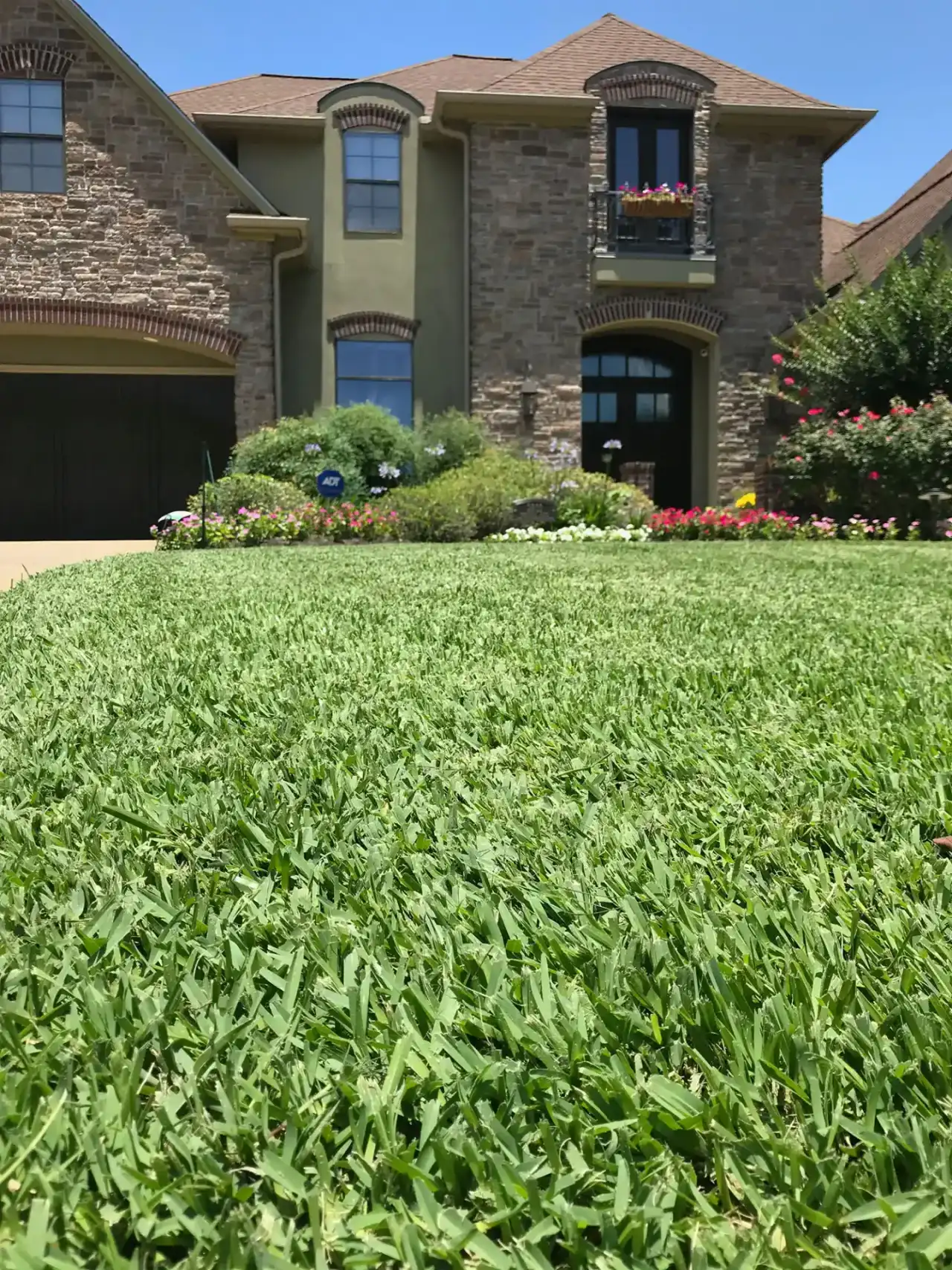
If you are standing over a patch of St. Augustine that has gone off color in the last few weeks, you are looking at the most common call we get in September and October. The frustrating part is that three different problems produce broadly similar symptoms at this time of year, and the products that fix one do nothing for the others.
Here is how we tell them apart on a property, and what fall care should actually look like for warm season turf in Bryan and College Station.
Brown Patch, the Autumn Classic
Brown patch is a fungal disease and it is triggered by exactly the conditions we get in a Brazos Valley fall: nighttime temperatures dropping into the 60s, high humidity, and leaf surfaces that stay wet for long stretches.
The signature is shape. Brown patch produces roughly circular patches, often a foot to several feet across, sometimes with a slightly darker or smoky looking edge where the fungus is actively advancing. The grass inside the ring frequently looks thinned rather than completely dead.
The diagnostic test is the leaf pull. Take a yellowing blade in the affected area and tug gently. With brown patch, the leaf separates easily from the sheath at the base, and the base of that leaf will often look dark, water soaked, and slightly rotted. The roots, importantly, are fine.
The biggest contributor is watering in the evening. Grass that goes into a cool humid night with wet leaves is grass hosting a fungus. Shift irrigation to early morning and you have addressed a meaningful share of the problem for free. Fungicide helps when pressure is high, and it works far better preventively than curatively.
Chinch Bugs, the Heat Lovers
Chinch bugs are insects and they favor the opposite conditions: hot, dry, sunny. That difference in where damage appears is the fastest way to separate them from disease.
Chinch damage shows up in the hottest strips of the lawn. Along a south or west facing sidewalk, next to the driveway, against a brick wall, in the full sun section that always struggles. The pattern is irregular and spreading rather than circular, and the grass turns yellow and then straw brown and genuinely dies rather than thinning.
They are small, and adults have a distinctive black body with white wings folded over the back. The way to find them is to look at the edge of the damage rather than the dead center, part the grass at soil level, and watch for movement for a minute. They congregate where healthy grass meets dying grass.
People routinely water chinch damage more, assuming drought, which does not fix it. If the damage is in the hottest strip and the grass pulls out with roots attached and no rot, insects are the likelier answer.
Take-All Root Rot, the Slow One
This is the one most often missed, and it is common in St. Augustine across our region.
Take-all is a root disease. The visible symptoms are yellowing and gradual thinning in irregular patches, and the lawn simply does not respond to fertilizer the way it should. Because it attacks roots, affected turf lifts away easily, and when you look at those roots they are short, dark, and rotted rather than white and fibrous.
It is favored by stress: compacted soil, high pH, excessive nitrogen, and mechanical damage. Our alkaline clay is naturally hospitable to it.
The response is different from the other two. Fungicide has limited value once it is established. What helps is reducing stress: correcting compaction, easing off nitrogen, and topdressing with an acidifying organic material such as peat moss, which has a long track record for suppressing it in this region. It is a slow recovery measured in seasons rather than weeks, which is exactly why identifying it correctly matters.
What Fall Feeding Should Actually Do
Here is where a lot of well intentioned homeowners hurt their lawns.
Warm season grasses are heading toward dormancy. They are not trying to produce new top growth, and pushing them to do so is counterproductive. A heavy nitrogen application in October produces soft, lush growth that is more susceptible to brown patch and more vulnerable to the first freeze.
What the plant is doing is moving energy into roots and rhizomes for winter storage. Fall feeding should support that, which means moderate rates and an emphasis on potassium rather than nitrogen. Potassium is associated with root development, cell wall strength, and cold hardiness, and it is what carries the lawn through dormancy and into a strong spring.
The general rule for our region is to stop meaningful nitrogen roughly six weeks before the first expected freeze.
Bermuda and Zoysia Are Not the Same Problem
Most of what is above centers on St. Augustine because it is the most common lawn in Bryan and College Station and the most susceptible to all three issues. If you have Bermuda or zoysia, the picture shifts.
Bermuda is considerably more tolerant of brown patch and take-all, and it is far less troubled by chinch bugs. What it wants is sun, and what it will not tolerate is shade, so thinning Bermuda under a maturing tree is usually a light problem rather than a disease problem. No fungicide fixes shade. Either the tree gets thinned or that area becomes a bed.
Bermuda also recovers by spreading, which St. Augustine does more slowly, so a damaged Bermuda lawn will often fill itself back in given fertility and water once the cause is removed.
Zoysia sits between the two. It handles some shade better than Bermuda, is denser than both, and is slower to recover from damage precisely because it grows more slowly. Patience matters more with zoysia than with anything else we work on.
Knowing which grass you actually have changes the diagnosis, so it is worth being certain rather than assuming.
Watering and Mowing Into Dormancy
As temperatures fall, the lawn needs less water, and the most common autumn mistake is leaving the irrigation controller on its August schedule.
Move toward less frequent but deeper watering, which encourages roots downward and keeps leaf surfaces dry more of the time. Water in the early morning rather than the evening. Both changes reduce disease pressure and save water at once.
Keep mowing as long as the grass is growing, and do not scalp the lawn going into winter. Leaving St. Augustine a little taller through fall gives it more leaf surface to feed roots and better insulation. Keep the blade sharp, since torn leaf tissue is an entry point for exactly the fungal problems the season brings.
Also keep leaves off the turf. A layer of wet leaves sitting on dormant grass holds moisture against the surface and creates ideal disease conditions in an area you then cannot see.
What to Do Next
Go look at the affected area and answer three questions. Is the shape circular or irregular. Is it in the hottest strip of the yard or in a shaded, humid part. And when you pull on the grass, does it come away at the leaf base, come up with dark rotted roots, or hold firm with healthy white roots.
Those three answers separate the three problems more reliably than anything you can buy.
If you would rather have someone diagnose it properly and set the fall program correctly, that is what we do. Greener LawnScapes handles lawn care, landscape design, and installation across Bryan, College Station, and the Brazos Valley. Call 979-204-1996 or visit greenerlawnscapes.com.
Here is what to expect. We will get down at soil level rather than diagnosing from the driveway, tell you which of the three you actually have, and adjust your irrigation timing before we sell you a product. On a good number of properties the fix genuinely starts with moving the sprinkler clock to the morning.