Fence Installation
Wood, Iron, or a Masonry Wall? Choosing How to Enclose Your Yard
Greener Lawnscapes • October 2026 • Bryan & College Station, TX • 7 min read
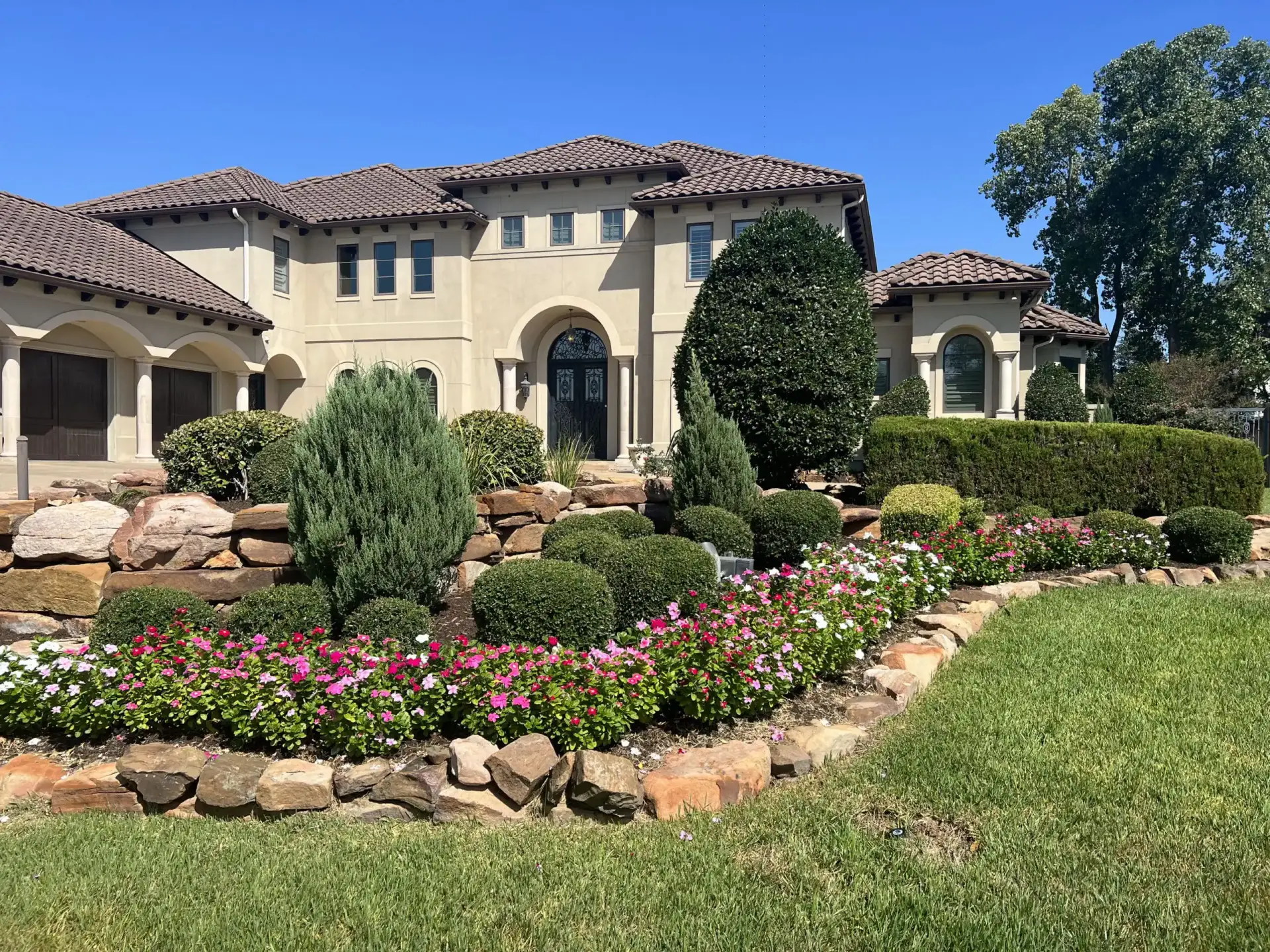
Short Answer: These three solve different problems and the right answer usually combines them. Wood privacy fence is the cost effective way to enclose a boundary and block sightlines. Ornamental iron gives security and containment without giving up a view, which suits properties backing onto greenbelt or pasture. Masonry walls are the most expensive per foot by a wide margin and they earn it in specific places, usually short runs that also retain grade, define an outdoor room, or carry the look of the house into the landscape.
Most people call about a fence with the material already decided, and the decision usually came from what the neighbors have. That is not a bad starting point, but it skips a question worth asking first, which is what you actually need the enclosure to do.
Privacy, containment, security, defining space, and retaining grade are different jobs. Some materials do several and some do one well. Here is how the main options compare in the Brazos Valley and where each earns its cost.
Start With the Job, Not the Material
Walk your property and name what you want from each stretch, because the answer often varies along a single perimeter.
Privacy means blocking sightlines, usually from a neighboring house or a road. That needs solid height. Containment means keeping a dog or kids in, which needs the right height and no gaps but not necessarily solid construction. Security means discouraging entry. Definition means creating an outdoor room or separating a patio from lawn, which often wants something low.
Retaining grade is the one that changes everything, because a structure holding back soil is engineering rather than carpentry. If you need to hold a slope, that is a wall, and it needs to be built as a wall regardless of what you would have preferred aesthetically.
Most Brazos Valley properties we work on need different things on different sides. Solid privacy where you face a neighbor, open view where you back onto pasture or a greenbelt, and something low and finished around the patio.
Wood Privacy Fence
Wood is the default here for good reasons. It delivers full privacy, it is the most economical way to enclose a long run, and it suits the look of most homes in the area.
Installed cost commonly runs $28 to $55 per linear foot for six foot privacy, which makes it the practical choice when you need to enclose two hundred feet of perimeter.
The limitations are worth knowing. Wood requires maintenance, meaning sealing or staining on a cycle if you want it to hold color rather than weather gray. It has a finite life, and our humidity, heat, and termite pressure are not gentle. And it blocks views along with sightlines, which is a cost rather than a benefit where you have something worth looking at.
In our expansive clay, post choice determines how long a wood fence stands straight. Galvanized steel posts with wood pickets, which is a common approach here for good reason, combine wood's appearance and economy with posts that do not rot or move the way wood does.
Ornamental Iron
Iron, meaning powder coated steel or aluminum picket fencing, does a specific job very well and is underused on properties where it would be the better answer.
It contains without enclosing. On a lot backing onto a greenbelt, a pond, a pasture, or a golf course, iron keeps a dog in and keeps the view, and on those properties the view is frequently why the lot was purchased. Putting six feet of solid cedar across that sightline is a decision people regret.
It also requires essentially no maintenance. A powder coated fence gets washed occasionally and that is the routine. Over twenty years that is a meaningful difference against a wood fence needing periodic staining and eventual repair.
Installed cost typically runs higher than wood per foot, so it is usually not the answer for a long privacy run. The other limitation is obvious, which is that it provides no privacy at all and no wind block.
Many Brazos Valley properties do well with both. Wood along the neighbor facing sides, iron across the back where the view is.
Masonry Walls
Stone and masonry sit in a different price category and it is worth being direct about that. Per linear foot, a mortared stone wall costs several times what wood does, and on a long perimeter that is usually not where the money should go.
Where they earn it is in short runs doing more than one job. A wall that retains grade while defining a planting bed is doing structural work a fence cannot do. A low seat height wall around a patio creates an outdoor room and provides seating. A wall carrying the same stone as the house extends the architecture into the landscape in a way no fence does.
They also last. A properly built masonry wall with a real footing, drainage behind it, and capstones is a permanent feature rather than a maintenance item. There is no staining cycle and no post replacement.
The construction details that matter are invisible once finished. A footing below the active soil zone, which in our clay means going deeper than people expect. Drainage behind any wall retaining soil, because hydrostatic pressure is what fails walls. Proper capstones shedding water off the top rather than letting it into the assembly.
Where a wall retains meaningful height, engineering is not optional. Our clay exerts serious lateral pressure when saturated, and a wall built without that accounted for will eventually lean or fail.
Combining Them Well
The properties that look best usually use more than one material, and the logic is functional rather than decorative.
A common arrangement here is wood privacy fence on the sides where neighbors are close, iron across a rear boundary with a view, and a low stone wall defining the patio or holding a grade change near the house. Each material is doing the job it is best at, and the cost is concentrated where it produces the most benefit.
Where materials meet, the transition needs designing rather than improvising. A stone column where wood meets iron, or a masonry pier at a gate, gives the change of material a reason to happen and reads as intentional.
The other combination worth considering is a fence with a masonry element at the entry. A stone framed gate on an otherwise wood fence concentrates a modest amount of money at the point everyone sees and touches.
What Our Soil Demands From All of Them
Expansive clay is the common thread and it affects every option, which is why it deserves saying once clearly.
Our soils swell when wet and shrink when dry, and the Brazos Valley swings between those states hard. Anything set in the ground experiences cyclical force, and structures that do not account for it move.
For fences, that means post material and footing depth matter more here than in most markets. For walls, it means footings below the active zone and drainage behind anything retaining soil. For both, it means drainage along the structure, because water collecting at the base of a fence line or behind a wall accelerates every failure mode.
A contractor who does not mention soil when quoting a fence or wall in this area has not thought about the part that determines whether it lasts.
What to Do Next
Walk your perimeter and name the job for each stretch. Privacy here, view there, containment across the back, definition around the patio. That map usually makes the material choices obvious and often saves money by putting the expensive option only where it earns its keep.
Confirm your property lines and check your HOA and city requirements before committing to anything. Many neighborhoods in Bryan and College Station restrict materials, height, and placement, and some have specific rules about walls that differ from their fence rules.
If any part of the project retains soil, treat that as a separate conversation from fencing. Ask specifically about footing depth, drainage behind the wall, and whether the height involved requires engineering.
If you would rather have someone walk the property and design the enclosure around what each side actually needs, we are here for that. Call Greener Lawnscapes at 979-705-9545 or visit greenerlawnscapes.com. We serve Bryan, College Station and the surrounding Brazos Valley.