Lawn Disease Control
How to Tell Brown Patch From Other Brown Spots in Brazos Valley Lawns
Greener LawnScapes • November 2026 • Bryan-College Station, TX • 7 min read
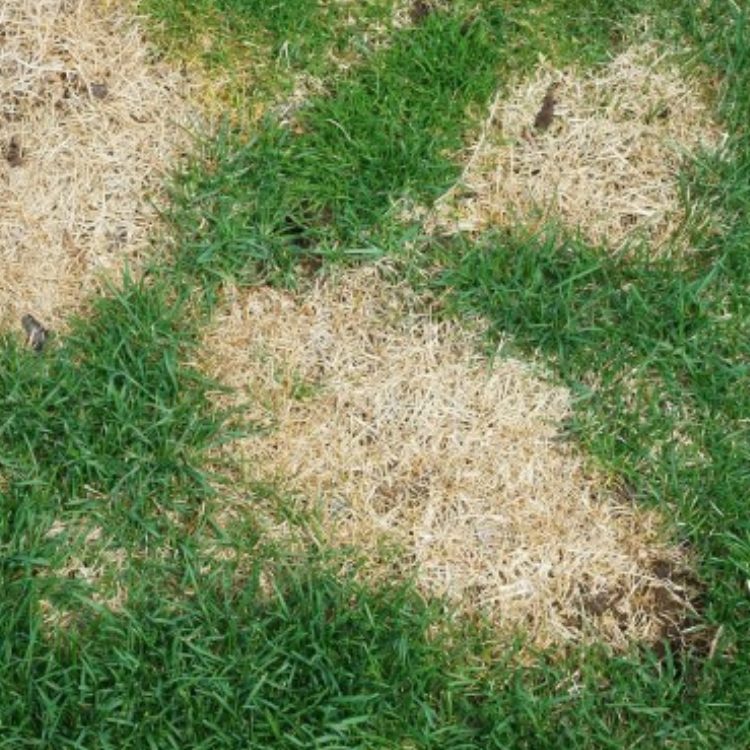
Short Answer: Brown spots in Bryan and College Station lawns can have several causes that look alike from the street. Brown patch, or large patch, forms roughly circular patches with an orange or bronze edge during cool, wet fall and spring weather. Chinch bug damage shows up in hot, dry, sunny areas in summer, often near pavement. Take-all root rot causes irregular yellowing with dark, rotted roots. Drought stress follows gaps in irrigation coverage. Grubs let the turf lift like a loose carpet. Dog spots are small with a dark green ring. A close look before treating saves time and money.
If you are reading this, you are probably looking at a brown or yellow patch in your lawn and wondering what caused it. Is it a fungus? Bugs? Not enough water? Too much? It is a frustrating question, because many lawn problems look almost identical from a few feet away.
Getting the answer right matters. Treating a chinch bug problem with fungicide, or brown patch with insecticide, wastes money and lets the real problem keep spreading. Here is how to sort it out in Brazos Valley lawns.
Start With Timing
When the damage appeared is one of the best clues.
Brown patch, also called large patch, shows up when temperatures are mild and the grass stays wet, typically in fall from October into November, and again in spring.
Chinch bugs cause the most damage in hot, dry summer weather, usually from June through September.
Drought stress shows up during hot, dry stretches, especially when watering is limited or uneven.
Grub damage usually shows up in late summer and early fall.
Take-all root rot often develops slowly and becomes most visible in spring and early summer.
Look at the Shape and Edges
Brown patch tends to form roughly circular patches, from a foot to several feet across, with an orange, bronze, or reddish ring at the edge where the disease is active. The center may be thin and straw-colored.
Chinch bug damage usually starts as irregular yellow areas that turn brown and spread outward, without a distinct colored ring.
Drought stress follows the irrigation pattern: dry areas between sprinkler heads, along walkways, and in sunny spots.
Take-all root rot forms irregular yellow, thinning areas rather than neat circles.
Dog spots are small, circular dead areas, often with a ring of dark green, fast-growing grass around them.
Check the Location
Where the damage appears also tells you a lot. Brown patch shows up first in low spots, shaded areas, near downspouts, and where sprinklers overlap, all places that stay wet. Chinch bugs favor the hottest, sunniest, driest parts of the lawn, often next to driveways, sidewalks, and curbs. Drought stress hits areas the sprinklers miss and sandy or compacted spots that dry out fast.
Tug on the Grass
A simple tug test helps narrow it down. With brown patch, the leaf sheaths pull away easily from the runner, and the base of the blade looks dark or rotted. With take-all root rot, the roots are short, dark, and rotted, and runners pull up easily. With grubs, the turf peels back like a loose carpet, revealing C-shaped white grubs in the soil. With chinch bugs or drought, the grass is dry and straw-like but usually still attached.
Look for Chinch Bugs
Southern chinch bugs are small insects that feed on St. Augustine. At the edge of the damaged area, where yellow grass meets green, part the grass and look closely at the soil surface. You may see tiny black insects with white markings, or smaller reddish nymphs. Another method is to push a can with both ends removed into the soil, fill it with water, and watch for insects floating to the surface.
The Water Test for Drought
If you suspect drought stress, water the area well and watch it over several days. Drought-stressed grass usually begins to recover. Brown patch, chinch bug, and take-all damage do not respond to water alone.
Other Look-Alikes
Gray leaf spot affects St. Augustine in warm, humid weather and shows up as small gray or brown spots with dark borders on the blades, often encouraged by heavy nitrogen. Fairy ring causes rings or arcs of dark green or dead grass, sometimes with mushrooms. Mower scalping leaves brown areas on high spots or slopes. Fertilizer or chemical spills leave dead areas with sharp edges.
Why the Brazos Valley Sees So Many of These
Brazos Valley lawns face hot summers, mild and humid falls, heavy clay soils in many areas, sandy loam in others, and a mix of St. Augustine, Bermuda, and zoysia. That combination creates conditions for nearly every common lawn problem at different times of year.
Two Problems at Once
Sometimes a lawn has more than one problem. A St. Augustine lawn can have chinch bug damage from summer and brown patch in the same area in fall. Looking at the edges, the roots, and the timing of each patch helps separate them.
Why the Right Diagnosis Matters
Each problem has a different fix. Brown patch needs moisture management, careful fertilization, and often preventive fungicide. Chinch bugs need insect control and healthy cultural practices. Drought stress needs better irrigation coverage. Take-all root rot needs moisture management, soil care, and sometimes fungicide. Grubs need insect control at the right time. Applying the wrong treatment wastes money and lets the real problem continue.
Good Habits Help With Most of Them
A few practices reduce most of these problems. Water deeply and less often, early in the morning, and check that sprinkler coverage is even. Mow St. Augustine at about three to four inches. Avoid heavy nitrogen, especially in fall. Clear leaves from damp areas. And improve drainage in low spots.
Brown Patch Versus Normal Dormancy
In late fall and winter, St. Augustine and Bermuda naturally slow down and may brown after a hard freeze. Dormancy is even across the lawn and happens all at once. Brown patch shows up as distinct circles or patches while the rest of the lawn is still green, usually before the first freeze.
Shade and Tree Roots
Areas under live oaks and post oaks can thin out from shade and root competition, which can look like disease from a distance. Thin grass under trees that slowly declines over a few seasons is often a shade problem, while brown patch appears suddenly as expanding circles.
Keep Track of Patterns
Take photos of damaged areas and note when they appeared. Over a season or two, the pattern often makes the cause obvious, especially if the same spots return at the same time each year.
When to Get a Closer Look
Some damage is hard to diagnose, especially when two problems overlap. A close inspection by someone who sees a lot of local lawns can help, and Texas A&M AgriLife's plant disease diagnostic lab in College Station can identify samples.
What the Right Diagnosis Looks Like
Imagine this. The brown circles in your backyard that you thought were bug damage turn out to be brown patch, confirmed by the orange edge and the rotted leaf sheaths. The irrigation gets cut back, a preventive fungicide goes down, and next spring the backyard is green. Meanwhile, the yellow area by the driveway turned out to be chinch bugs, caught early in summer and treated before it spread.
What to Do Next
When you find a brown patch, note when it appeared, check its shape and edges, look at where it is in the yard, and tug the grass to see whether the sheaths or roots are rotted. Look for chinch bugs where yellow meets green, water suspected drought spots and watch for recovery, and get a closer look before treating anything you cannot identify.
If you would rather have someone else keep brown patch in check, we are here for that. Greener LawnScapes serves Bryan, College Station, and the surrounding Brazos Valley. Call 979-705-9545 or visit greenerlawnscapes.com to request a free quote.
Here is what to expect. We will walk your lawn, look closely at any patches, talk through your watering and fertilizing habits, and explain whether a fungicide application makes sense for your yard. If your lawn does not need one, we will tell you that honestly.