Landscape Lighting
What Does Landscape Lighting Cost, and Is Low Voltage Worth It?
Greener Lawnscapes • October 2026 • Bryan & College Station, TX • 7 min read
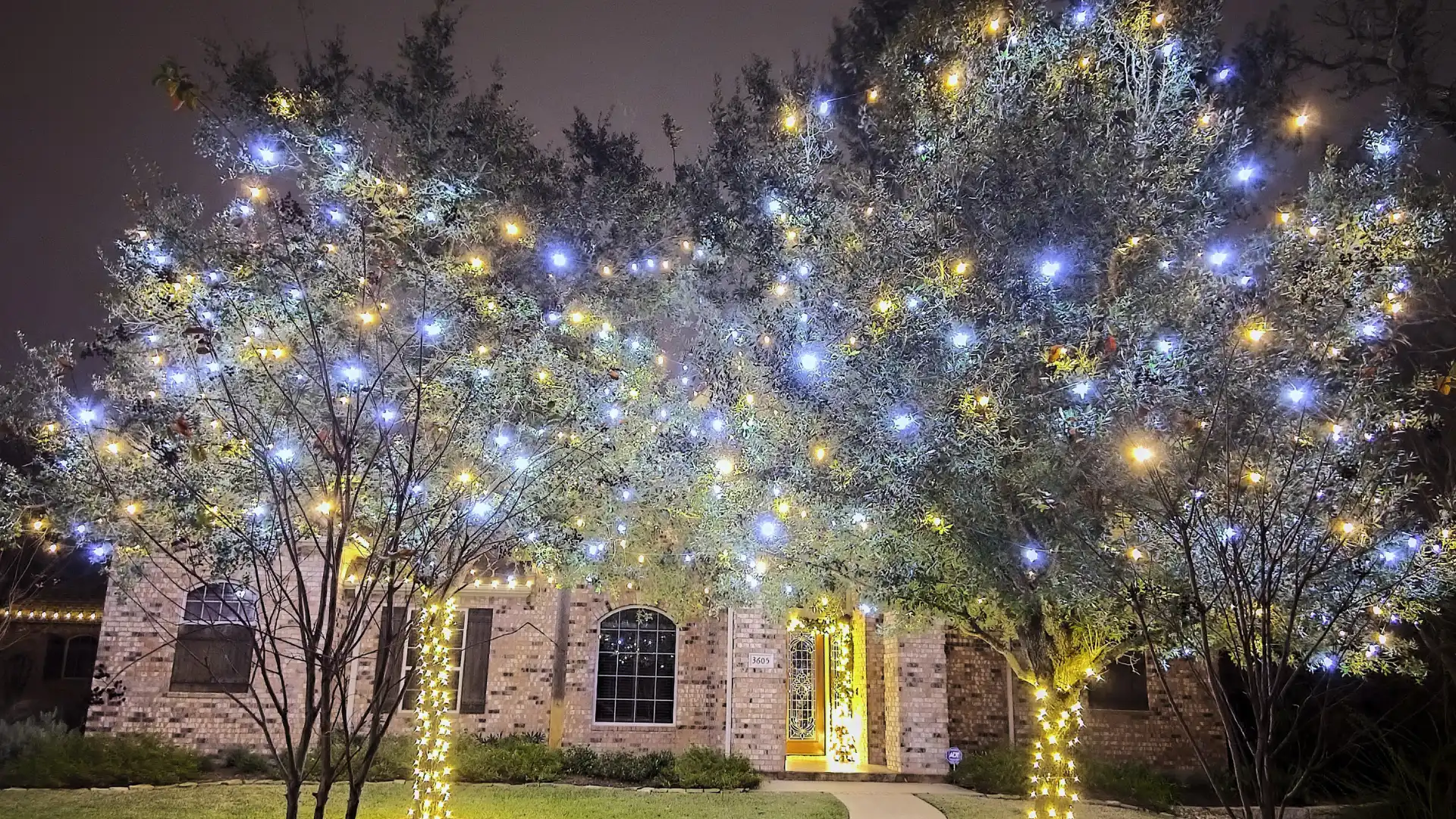
Short Answer: A professionally installed low voltage lighting system in the Brazos Valley generally runs $200 to $400 per fixture installed, which includes the fixture, wire, a share of the transformer, and labor. A modest starter system of eight to twelve fixtures lands somewhere between $2,000 and $4,500, and larger properties go up from there. Low voltage is worth it over solar because the output is consistent, the fixtures last, and the system is expandable. Solar stake lights are inexpensive for a reason.
Landscape lighting pricing is confusing because the range on the shelf is enormous. Solar stake lights cost a few dollars each at the hardware store, and a professionally installed system runs into the thousands. Both are described as landscape lighting.
They are genuinely different products, and the difference is worth understanding before you spend money in either direction. Here is what the real numbers look like around Bryan and College Station and what you get at each level.
How Lighting Gets Priced
Professional low voltage lighting is quoted per fixture installed, and that figure bundles the fixture itself, the wire run to it, a proportional share of the transformer, trenching or burying the cable, connections, and aiming.
Around our area that commonly lands between $200 and $400 per fixture installed. Path lights sit at the lower end. Well lights, larger uplights, and specialty fixtures such as recessed step lights sit higher because both the fixture and the installation labor cost more.
A modest system of eight to twelve fixtures, which is enough to light a front entry, a couple of trees, and a walk, typically runs $2,000 to $4,500. A more complete system covering front and back on a larger property, with twenty to thirty fixtures, climbs from there.
The transformer is a real line item on its own, generally a few hundred dollars depending on capacity, and it should be sized with headroom so the system can be expanded later rather than maxed out on day one.
What Low Voltage Actually Means
The term describes how the system is powered and it explains most of the advantages.
A transformer mounted near an outdoor outlet steps household current down to twelve volts. That low voltage cable then runs to the fixtures, buried at a shallow depth rather than in conduit. Because it is twelve volts rather than line voltage, the safety requirements are far less demanding, the wire is simpler, and the system is genuinely safe to work around.
That is why low voltage dominates residential landscape lighting. A line voltage system requires conduit, deeper burial, and in most cases a licensed electrician, which changes the cost substantially.
It also makes the system expandable. Adding fixtures later means tapping the existing cable, which is straightforward provided the transformer was sized with capacity to spare. That is a reason to ask about transformer headroom when you get a quote, because a system built exactly to today's load cannot grow.
Why Solar Disappoints
Worth addressing honestly, since nearly everyone tries solar stake lights before calling anyone.
Solar fixtures contain a small panel, a small battery, and an LED. The output is limited by how much energy that small panel collected during the day, which means performance drops with shade, with cloudy weather, and through winter when days are short. That is precisely the season when you most want the lighting working.
Brightness is also modest and it fades through the night as the battery drains, so a fixture bright at nine is dim by midnight. And the batteries degrade, typically within a couple of years, at which point output drops noticeably.
Fixture durability compounds it. Most inexpensive solar lights use plastic housings and lenses that become brittle and cloudy in Texas sun. A few seasons in and they look worse than no lighting.
Where solar makes sense is a temporary need, a spot with no practical way to run cable, or simply testing where you might want light before committing. As a permanent solution on a property you care about, it does not hold up.
Where the Money Goes
The fixture is a meaningful share of the cost and it is where longevity is decided.
Cast brass and copper fixtures cost considerably more than aluminum or plastic and they last essentially indefinitely outdoors. In our humidity and heat, that difference is not theoretical. Brass develops a patina and keeps working. Plastic fades, becomes brittle, and cracks.
LED has effectively replaced halogen and it is a genuine improvement. Dramatically lower power draw means a single transformer runs far more fixtures, and lamp life measured in tens of thousands of hours means you are not replacing bulbs across the yard every season. The trade is that color temperature is fixed at purchase, which makes choosing warm output at around 2700K important up front.
Wire is the invisible cost that separates good installations from cheap ones. Voltage drop is real in a low voltage system, meaning fixtures at the end of a long run receive less voltage and produce dimmer, colder light than fixtures near the transformer. Proper wire gauge and thoughtful run layout prevent that. Undersized wire is a way to save money that shows up as inconsistent brightness across the yard.
Connections matter for the same reason. Waterproof connectors rather than twist caps buried in the ground, because a corroded connection in Brazos Valley humidity is the most common failure point in any system.
Controls and Running Costs
Operating cost surprises people in a good direction. An LED system of fifteen fixtures draws roughly the same as a couple of household light bulbs, so running it every evening adds a small amount to a power bill rather than a noticeable one.
Controls are worth getting right. A basic timer works but needs resetting as sunset shifts through the year, which is exactly the nuisance people stop bothering with. A photocell turns the system on at dusk automatically. An astronomic timer tracks sunset and sunrise by date and location, which handles both the seasonal shift and the clock change on the first of November without anyone touching it.
Zoning is worth asking about on larger systems. Being able to run the front entry every evening while the back patio lighting comes on only when you want it gives you flexibility and reduces wear.
Maintenance, Honestly
Landscape lighting is low maintenance rather than no maintenance, and knowing the real list prevents disappointment.
Fixtures need occasional cleaning, since lenses accumulate dust and our pollen seasons are not gentle. A dirty lens costs real output.
Aiming drifts. Fixtures get bumped by mowers, string trimmers, and dogs, and plants grow into beams. An uplight that perfectly framed a crape myrtle three years ago may now be lighting the underside of a shrub that filled in around it. Periodic reaiming is the single most valuable maintenance item and it costs nothing but time.
Plant growth is the bigger version of that problem. Trees mature, beds fill in, and a design that suited the landscape at installation needs revisiting as things grow. That is worth planning for rather than treating as a fault.
Connections and the transformer deserve an occasional look, and any fixture that has gone noticeably dimmer than its neighbors is usually telling you about a connection rather than a lamp.
What to Do Next
Start smaller than you think and build. A well designed system of eight to twelve fixtures lighting the best features on the property beats twenty fixtures spread thin, and it costs less. Make sure the transformer is sized with headroom so phase two is simple.
Walk the property after dark with a flashlight before you buy anything, and test what actually looks good lit. Ten minutes of that tells you more than any catalog, and it prevents paying for fixtures aimed at things that turn out not to be worth seeing.
When comparing quotes, ask four things. What fixture material. What color temperature. What wire gauge and how are runs laid out for voltage drop. What transformer capacity, and how much headroom is left. Those answers reveal which system will still look right in ten years.
If you would rather have someone design and install a system built to last in this climate, we are here for that. Call Greener Lawnscapes at 979-705-9545 or visit greenerlawnscapes.com. We serve Bryan, College Station and the surrounding Brazos Valley.