
Spring Landscape Refresh in Bryan, TX: When to Update Plants vs Redesign the Whole Yard
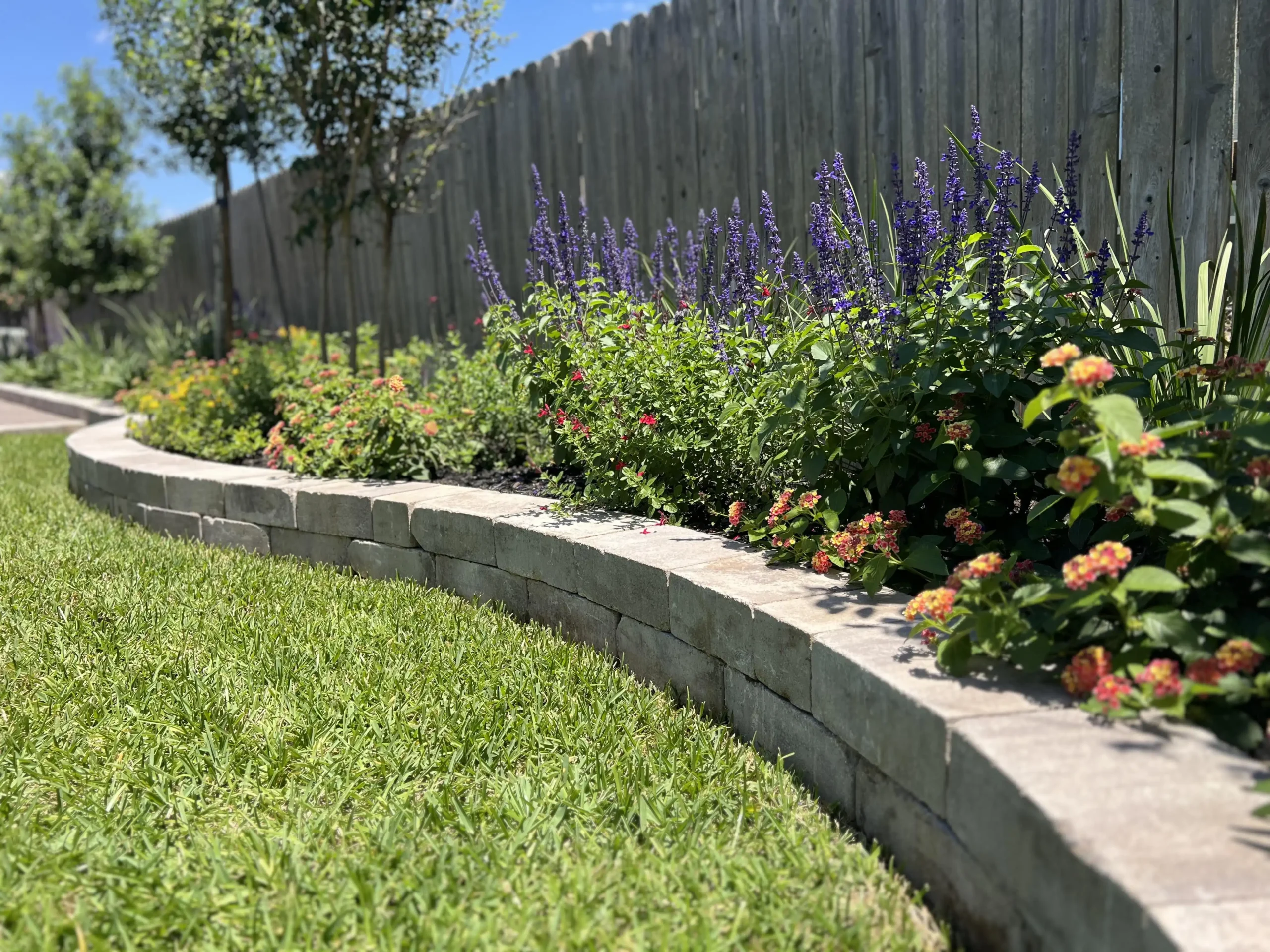
Short Answer: A landscape refresh updates existing plants and beds while preserving the underlying design and layout. A redesign rebuilds the bones of the landscape, adjusting bed shapes, hardscape, and how spaces connect. A refresh is the right choice when the existing structure works but plants are tired or outdated. A redesign is needed when the underlying layout no longer fits how you use the yard. Refresh costs run $1,500 to $5,000 for most Bryan area homes. Redesigns run $5,000 to $25,000 or more depending on scope. Here is how to tell which one your yard actually needs.
If you are looking at your Bryan or College Station yard this spring and feeling that something is off but not sure what to do about it, you are at a common crossroads. Some homeowners think they need a full redesign when they really just need a refresh. Others try to refresh their way out of a fundamental design problem and end up frustrated when the yard still does not feel right.
Knowing the difference saves you money and produces better results. Let us walk through how to evaluate which one you actually need.
What a Refresh Includes
A landscape refresh works within the existing layout. Typical refresh work:
Removing tired or outgrown plants and replacing them with newer, well-sized selections.
Refreshing mulch across all beds (most beds need new mulch every 1 to 2 years).
Adding seasonal color or new perennial groupings within existing bed shapes.
Pruning or removing overgrown shrubs that have outgrown their spots.
Refreshing edging where it has become indistinct or worn.
Adding a few accent plants for visual interest where the existing design lacks variety.
Refresh projects typically take 2 to 5 days of installation work and run $1,500 to $5,000 for most residential properties depending on the size of beds and the materials selected.
What a Redesign Includes
A landscape redesign rebuilds the bones. Typical redesign work:
Reshaping or relocating plant beds to better fit how the yard is used.
Adding, expanding, or relocating hardscape elements (patios, walkways, retaining walls).
Significant grading changes to address drainage or create new functional spaces.
Removing or relocating mature plants that are in the wrong locations.
Installing new outdoor living spaces (patios, fire pits, pergolas).
Adding lighting, irrigation, or other infrastructure.
A major plant overhaul integrated with the new layout.
Redesign projects typically take 6 to 16 weeks from concept through completion and run $5,000 to $25,000 or more depending on scope.
When a Refresh Is the Right Call
Five signs your yard needs a refresh, not a redesign:
The bed shapes work and you are happy with where things are placed.
Hardscape (patios, walkways) is functional and appropriate for how you use the yard.
Drainage is fine; water moves where it should.
The lawn area and structure of the yard fit your lifestyle.
The problem is mostly that plants have aged out, mulch is faded, or specific elements look tired.
If most of these are true for your property, a refresh will produce dramatic improvement at modest cost. The bones of the landscape are sound. You just need to update the surface.
When a Redesign Is the Right Call
Five signs your yard needs a redesign:
Bed shapes feel wrong. Plants are crowded in some places and sparse in others. The flow does not work.
Hardscape is missing where you need it (no patio, no clear walkway) or in the wrong place (patio that is unused, walkway that does not get walked).
Drainage problems persist year after year. Water pools where it should not. The grading is fundamentally wrong.
How you use the yard has changed. Kids grew up. You entertain more or less. You added a pool, dog, or other major feature that the yard does not accommodate.
Multiple refresh attempts have not produced lasting satisfaction. You keep changing plants but the yard still feels off.
If most of these are true, refresh work will not solve the underlying issues. A redesign addresses the bones first, then the plants integrate properly with the new layout.
The Hybrid Approach
Many projects fall in between. Maybe the front yard works well and just needs a refresh while the back yard needs significant redesign. Maybe most of the property is fine but one specific area (a side yard, the entry approach) needs more substantial work.
We often handle these as two separate scopes within one project. Refresh the areas that work, redesign the ones that do not. This produces better results than trying to force one approach onto the whole property.
Timing Considerations
Spring is good for refreshes because new plant material is widely available and the establishment window before summer heat is optimal. We typically book spring refreshes through April for completion by Memorial Day.
Spring is also a reasonable time to start design work for fall installation of larger redesigns. Cooler fall planting weather is actually better for major plant installation than late spring, so projects designed in May can be installed in September with excellent establishment conditions.
Summer heat (July, August) is the worst time for any major planting work. We avoid scheduling significant installations during peak heat unless the project specifically requires it.
What to Expect From Each
A refresh produces visible improvement immediately. The day we finish, the yard looks better. Plants establish over the next 6 to 12 weeks and look even better as they fill in.
A redesign requires more patience. The work itself is disruptive while it is happening. Once installation is complete, the new structure is immediately apparent but the planting takes 1 to 3 years to mature into its full appearance. The first year often looks somewhat sparse as plants are sized to grow into their permanent positions.
Cost vs Value Considerations
A refresh costs less and produces immediate results that fade over 3 to 5 years as plants outgrow or look tired again.
A redesign costs more but addresses underlying issues and produces a yard that improves for 10 to 15 years before needing another major intervention.
For homes you plan to stay in long term, redesigns often produce better lifetime value despite the higher upfront cost. For homes you plan to sell within a few years, refreshes typically deliver better return on investment.
What to Do Next
If you are not sure whether your Bryan or College Station yard needs a refresh or a redesign, we are glad to come walk it with you. We will give you an honest assessment of what would actually serve you best and what we would do for our own yards if we were in your shoes. Reach out anytime.