
Mid-Summer Plant Replacement vs Waiting for Fall in Bryan TX: When to Pull and Replant Now
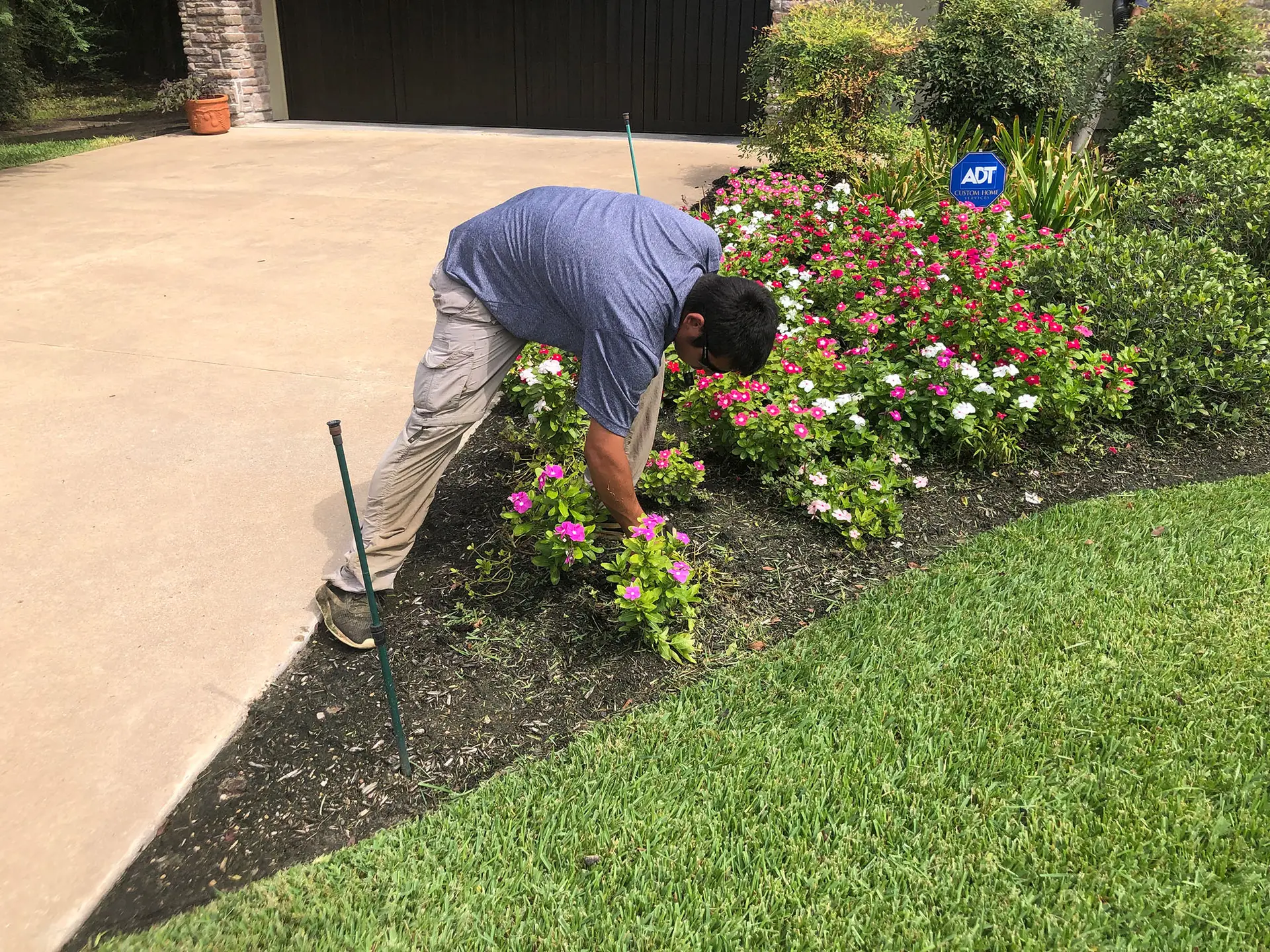
Short Answer: Some plants will survive a July install in Bryan and College Station if you give them the right water and shade through the first six weeks. Most other plants will not, and trying to replace them in July is a 200 to 600 dollar mistake that could have waited for late September. The right rule of thumb: replace annuals and small heat-loving perennials now if they are clearly dead or hopeless. Replace failed shrubs and trees in October. Wait on larger ornamental grasses and any sun-grown plant going into a hot exposure until air temperatures break. We walk through which plants tolerate a Brazos Valley July install, which do not, and what the realistic establishment plan looks like for each.
Every July we get calls from Bryan and College Station homeowners standing in front of a dead plant or a half-dead bed wondering whether to pull it now or wait. The honest answer is that it depends on what the plant is, where it sits, and whether the homeowner is willing to commit to the establishment care that a July install requires. The wrong call wastes money. The right call rescues the season.
This post walks through how to make that decision. We list what survives a July install in our area, what does not, and what the establishment routine actually looks like if you choose to plant now.
Why July Transplanting Is Hard in Brazos Valley
A newly installed plant has lost most of its working root system in the transition from container to ground. Even with a clean root ball, the fine feeder roots that do most of the water uptake take three to six weeks to rebuild. During those weeks the plant is dependent on whatever moisture is in the planting hole and whatever the irrigation can supply at the surface.
In April that is easy. Air temperatures are mild, evapotranspiration is low, and the plant can coast for a couple of days between waterings. In July it is hard. Soil surface temperatures in Bryan can hit 130 to 140 degrees in afternoon sun. A plant with an underdeveloped root system loses water faster than it can take it up. Wilting becomes constant. Recovery becomes uncertain.
That is the underlying reason most landscape professionals recommend fall planting for the Brazos Valley. October through early December gives plants three to four months of mild weather to root in before they face their first summer. Late September installations get four to six weeks of warm but moderating weather, which is also enough. April installs get six to eight weeks of cool weather before heat starts. July installs get a week of acclimation before the next heat dome.
Plants That Tolerate a July Install in Our Area
Some plants are tough enough or fast-rooting enough to handle a July install if the establishment plan is good. Here is what we will plant in July on client properties.
Heat-loving annuals
Vinca, lantana annuals, zinnias, pentas, purslane, moss rose, and sun-tolerant coleus. These are designed to grow fast in heat and most of them root in within a week or two. We use them to refresh tired containers and patio beds where the spring annuals have given up. Establishment routine is daily watering for the first two weeks, then every other day for the next two, then settled into normal annual care. Replacement cost is modest and the return on color is immediate.
Small heat-loving perennials
One-gallon autumn sage, one-gallon lantana, small Mexican mint marigold, small artemisia. These have small root balls and root in fast. Establishment routine is deep watering twice a week, mulch heavily, light afternoon shade for the first three weeks if exposure is harsh. Plan for some die-back of foliage in the first month. The plant usually recovers and pushes new growth by early September.
Ornamental peppers and herbs
Ornamental peppers, basil, rosemary, oregano. All handle a July install reasonably well as long as watering is consistent. These are often the best choice for filling a hole in a kitchen-garden or container planting where the spring herbs have bolted or burned up.
Containerized tropicals
Bougainvillea, hibiscus, mandevilla, plumbago. These want heat and bloom heavily in it. Establishment is straightforward as long as the container is the right size and the soil is well-drained. We do not plant tropicals in-ground in July unless the homeowner is comfortable with the freeze risk in winter.
Plants That Should Wait for Fall
Most of what fails in a Bryan summer bed should be replaced in October or November, not July.
Most shrubs
Boxwood, hollies, viburnums, Indian hawthorn, dwarf yaupons, abelias. The root balls are large relative to the canopy and the establishment water demand exceeds what most homeowners can reliably provide in July heat. We have planted these in July when the project schedule required it, but we use 100 percent shade cloth for the first three weeks and irrigate twice a day for six weeks. Even with that, the survival rate is meaningfully lower than fall installs. Most homeowners are better off waiting.
Trees
Any tree larger than a 5-gallon. July is the worst possible time to plant a tree in our area. The transplant shock combined with heat stress sets back establishment by months and increases mortality. We will plant 1-gallon and 5-gallon trees in emergency situations, but for any meaningful tree install we recommend October through February.
Cool-season ornamentals
Anything sold to bloom in spring including pansies, snapdragons, dianthus, larkspur, and stock. These belong in October installations for spring bloom. Replanting them in July just to fill a hole will produce a few weeks of declining performance and a complete failure by August.
Larger ornamental grasses
Five-gallon and larger muhly grasses, deer grass, and inland sea oats. The root system has to support a significant canopy and establishment in July is unreliable. We plant these in October. Smaller one-gallon installs of the same species can sometimes work in July with care.
Roses
Especially own-root antique roses and David Austin types. July install puts them under stress they often do not recover from. Wait for late October.
The Honest Cost Math
If a homeowner is looking at a bed with three dead three-gallon shrubs, the replacement decision comes down to cost math.
Option A: replace now in July. Three new shrubs installed at 60 to 110 dollars each, plus the labor adjustments for heat-stressed installation, plus extra mulch, plus an irrigation top-up. Realistic cost runs 350 to 700 dollars. Expected outcome: maybe two of three survive to fall, depending on weather, exposure, and irrigation. If a shrub fails, replanting it in fall adds another 60 to 110 dollars per failure.
Option B: wait until October to replace. Three shrubs installed in proper conditions at the same materials cost. No premium for heat-stressed installation. Expected outcome: all three survive to next year. Total realistic cost runs 300 to 550 dollars.
The math nearly always favors waiting. The two cases where it does not are: a high-visibility front bed where the appearance for July through September matters more than the cost, and a situation where the homeowner is selling the property and needs the bed to read well by August.
What to Do With Dead Plants You Are Leaving in Place
If a plant has died and you have decided to wait for fall replacement, the bed will look better if you do a few things in the meantime.
Cut the dead material back to about 6 inches above ground or to where you can pull the dead canopy off without disturbing the surrounding plants. Leaving the root ball in place until fall keeps the bed grade intact and lets fresh mulch hide the gap. Add a 2 to 3 inch top dressing of fresh hardwood mulch to refresh the bed appearance. Consider a temporary annual or two in the gap (heat-loving species from the July install list above) for visual continuity through fall.
When fall arrives, the original root ball pulls out cleanly with a shovel, the planting hole is already prepared by months of mulch contact, and the new install goes in fast.
The July Install Routine That Actually Works
If you are going ahead with a July install for one of the species above, here is the routine that gives the plant the best chance.
Plant in the early morning or late evening. Avoid midday heat for both your sake and the plant’s. The root ball should go in cool, not after sitting in the sun for two hours.
Water the root ball deeply before planting. We submerge the container in a bucket of water for 5 minutes before installation. The root ball goes in saturated, which buys an extra day of moisture buffer.
Amend the planting hole modestly. Heavy amendment causes the root ball to stay in the soft pocket and never explore the surrounding clay. We add about 30 percent compost to the backfill and grade the surrounding bed to direct water toward the plant rather than away from it.
Mulch heavily but keep mulch off the stem. Three inches of hardwood mulch in a wide ring around the planting moderates soil temperature significantly. Mulch piled against the stem causes rot. The mulch ring should look like a doughnut, not a volcano.
Set up dedicated drip or hand-water schedule. Daily for the first 7 to 10 days, then every other day for the next two weeks, then back to whatever the surrounding bed gets. Skip the system schedule and water by hand if you cannot get the dedicated zone to deliver enough.
Add temporary shade if exposure is brutal. A 50 percent shade cloth supported on stakes over the new plant for the first two to three weeks reduces leaf temperature significantly and improves survival. The shade comes off in stages as the plant settles in.
What We Tell Clients on the Walk-Through
When we walk a Bryan or College Station property in July and the homeowner asks about replacing failed plants, the conversation usually goes like this. We look at each failure, identify the cause (irrigation, exposure, plant choice, age, disease, or homeowner care), and decide whether the cause needs to be fixed before any replacement makes sense. We then sort the failures into July-replace, fall-replace, and reconsider-the-bed-design categories. Most properties end up with one or two July replacements (usually annuals or small flowering perennials in visible spots), four to ten fall replacements, and one or two beds where the right answer is a redesign rather than a like-for-like replacement.
Frequently Asked Questions
What if I have to plant in July because of a builder’s punch list?
This happens often with new construction in our area. The right call is to negotiate a temporary install with the understanding that fall replacement of failures will be expected. Builders often default to plants that look fine at install and fail by August. Push back on plant selection and request a substitution to species that actually tolerate July install where possible.
Can I plant sod or new lawn in July?
St. Augustine and Bermuda sod can be installed in July with aggressive watering. The cost premium and survival risk are both real. October to early November installs are the gold standard. July sod installs work but the homeowner has to commit to 30 to 45 days of intensive watering.
What about plant warranties?
Most reputable installers offer a one-year warranty on plant material when they handle the install and the client follows the watering plan. July installs sometimes carry a reduced warranty or no warranty depending on the company. Read the warranty carefully before agreeing to a July install.
How do I know if a plant is actually dead vs just dormant?
The scratch test. Use a thumbnail to scratch a small spot of bark on a stem. Green underneath means the plant is alive. Brown and dry means that stem is dead. Test several stems. A plant with even one or two live stems often recovers. A plant where every stem scratches brown is dead.
What to Do Next
If you are looking at a bed with failures and want a professional read on what to replace now, what to wait on, and whether the underlying cause needs to be fixed first, we are glad to come walk the property. We will sort the decisions for you and tell you straight what the realistic outcome of each path looks like.
Call us at (979) 204-1996 or visit greenerlawnscapes.com to schedule. We serve Bryan, College Station, and the Brazos Valley.