
Spring Lawn Care Tips for Bermuda Grass in Bryan, TX
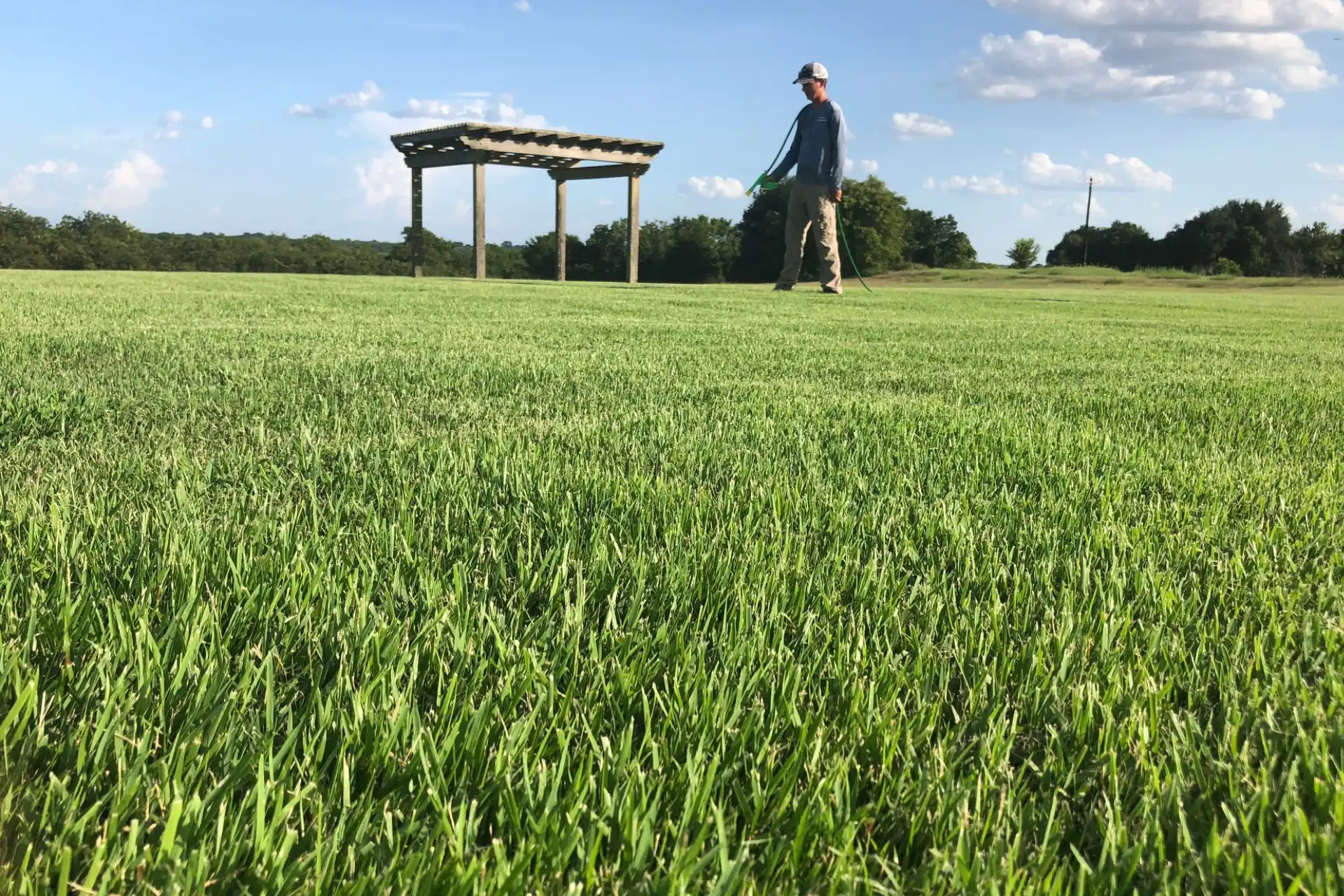
Short Answer: Spring is the most important season for Bermuda grass in the Brazos Valley. Your April and May checklist includes applying pre-emergent herbicide before soil temperatures consistently hit 55 degrees, waiting until at least 50 percent green-up to fertilize, mowing at the right height (1.5 to 2 inches for most residential Bermuda), checking your irrigation system for winter damage, and scheduling aeration if your soil is compacted. Here is the full breakdown with timing specific to Bryan and College Station.
If you are a homeowner in Bryan or College Station, you are probably watching your Bermuda lawn right now and trying to read the signals. Some patches are greening up, others still look dormant, and you are wondering when it is safe to start the spring program without jumping the gun.
That uncertainty is completely normal. Bermuda grass in the Brazos Valley operates on its own schedule, and that schedule changes slightly every year depending on winter severity and spring temperatures. The good news is that once you understand what Bermuda needs during green-up and the weeks that follow, the process becomes much more predictable. Here is what we recommend based on 15 years of caring for lawns in this area.
Pre-Emergent: Your First Line of Defense
If you have not already applied pre-emergent herbicide, this is the most time-sensitive item on your spring list. Pre-emergent creates a barrier in the soil that prevents crabgrass, goosegrass, and other summer annual weeds from establishing roots. But it only works if you apply it before those seeds germinate.
In the Bryan/College Station area, the window for pre-emergent application is typically late February through early March. Soil temperatures at a 4-inch depth need to be below 55 degrees consistently for the barrier to be effective against early germinators.
If you are reading this in April and you missed the window, you still have options. Some pre-emergent products containing dithiopyr offer early post-emergent control of crabgrass in its first growth stages. And even a late application provides some benefit against later-germinating weeds. It is not a perfect solution, but it is better than skipping it entirely.
Fertilization: Timing Is Everything
One of the most common mistakes we see in the Brazos Valley is fertilizing Bermuda grass too early. Those first warm days in March feel like spring has arrived, and the instinct is to feed the lawn and get things moving. But applying fertilizer to dormant or semi-dormant Bermuda wastes product and can actually feed the cool-season weeds that are already growing while your Bermuda is still waking up.
The rule we follow is simple: wait until your lawn is at least 50 percent green before applying the first round of fertilizer. In Bryan and College Station, that typically happens in mid to late April, though it varies year to year.
When you do fertilize, a slow-release nitrogen product is ideal for the first application. Something in the range of 1 pound of nitrogen per 1,000 square feet will give your Bermuda the fuel it needs for spring growth without pushing it too hard too fast. Follow up with additional applications every 6 to 8 weeks through the growing season.
Mowing: Set the Foundation Early
How you mow during green-up sets the tone for your lawn’s performance all season. For most residential Bermuda lawns in the Brazos Valley, a mowing height of 1.5 to 2 inches provides the best balance of density, color, and heat tolerance.
For your first mow of the season, it can be helpful to lower your cutting height by about half an inch to clean up the dead, straw-colored material from winter. This allows more sunlight to reach the emerging green growth and encourages faster, more even green-up. After that first cut, raise back to your normal maintenance height.
The one-third rule applies all season long: never remove more than one-third of the blade height in a single mowing. If you get behind after a rainy week (and in Brazos Valley spring, that will happen), raise the mower and bring it down gradually over two or three sessions rather than scalping it back to height all at once.
Irrigation: Less Is More in Spring
Bryan and College Station typically receive enough natural rainfall in spring to support Bermuda during green-up without supplemental irrigation. Running your sprinklers too early creates two problems that can affect your lawn for the entire season.
First, consistent surface moisture encourages shallow root development. You want your Bermuda to send roots deep during spring so it can access subsurface moisture during the brutal Brazos Valley summer. If water is always available at the surface, the roots have no incentive to go deeper.
Second, excess spring moisture creates ideal conditions for fungal diseases. Spring dead spot and take-all root rot are both present in the Brazos Valley and both thrive when soil stays wet during the cool-to-warm transition period.
Once your Bermuda is fully green and daytime temperatures are consistently above 85 degrees, that is the time to start your regular irrigation schedule. In most years, that means late May or early June in our area. When you do start watering, deep and infrequent is the goal: about 1 inch of water per week, applied in one or two sessions rather than daily light watering.
Check Your Irrigation System Now
Even though you may not need to run your sprinklers yet, spring is the right time to inspect the system. Turn on each zone and check for broken heads, misaligned spray patterns, leaks at connections, and heads that may have been damaged by mowing equipment or winter settling.
Pay attention to coverage uniformity. A head that has shifted even slightly can leave dry spots that will not show up until summer stress hits, at which point the damage is already done. Fifteen minutes of inspection now can prevent weeks of frustration later.
If you have an older system, spring is also a good time to evaluate whether your controller is programmed efficiently. Modern smart controllers adjust watering based on weather conditions and can reduce water usage by 20 to 40 percent compared to traditional timers.
Aeration: Open Up the Root Zone
Soil compaction is one of the most overlooked lawn care issues in the Brazos Valley. Heavy clay soils, foot traffic, and the weight of mowing equipment all compress the soil over time, restricting root growth and reducing how well water and nutrients can penetrate.
For Bermuda lawns, the best time to core aerate is late spring through early summer when the grass is actively growing and can quickly recover and fill in the aeration holes. If your lawn feels hard underfoot, if water pools on the surface after a moderate rain, or if you have not aerated in the past two years, it is worth scheduling.
Core aeration removes small plugs of soil and creates channels for air, water, and nutrients to reach the root zone. For lawns on heavy clay, we often recommend following aeration with a topdressing of compost to gradually improve soil structure over time.
What to Do Next
If you want your Bryan or College Station lawn to look its best this summer, the work you do in the next few weeks matters more than anything you will do in July or August. Spring is when the foundation gets set.
If this feels like more than you want to tackle on your own, we completely understand. Give us a call at (979) 204-1996 for a free lawn evaluation. We will walk your property, assess where things stand, and put together a program that fits your lawn’s needs and your budget. As a Certified Professional Turf Manager with over 15 years in the Brazos Valley, Daniel and the Greener LawnScapes team have the expertise to help your lawn thrive through every season.