Texas Heat-Tolerant Plants That Still Look Good in Brazos Valley July
8 Choices Worth Planting
Greener Lawnscapes • July 2026 • Bryan/College Station, TX
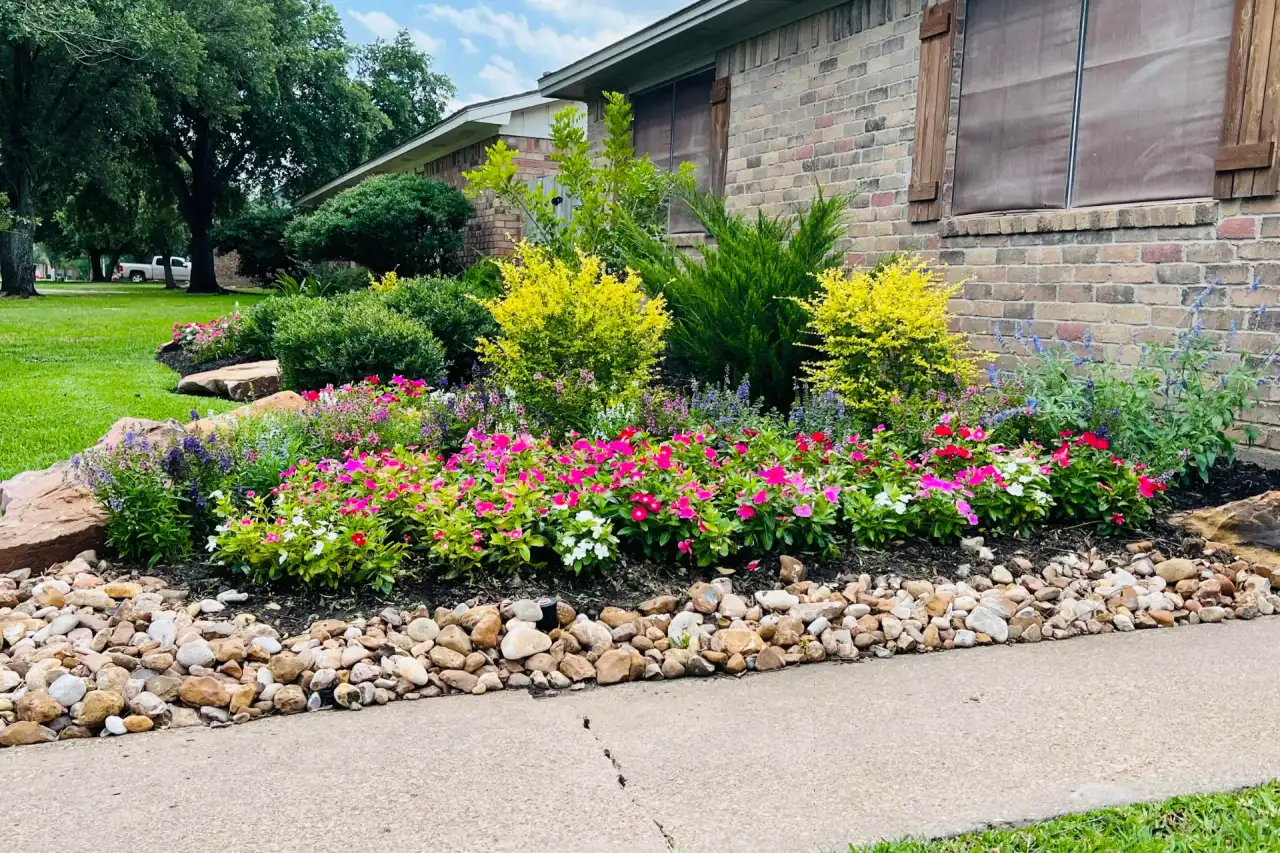
Short Answer: The plants that still look good in Bryan and College Station landscapes through July are the ones that evolved for our heat and clay, not the ones grown for spring color and then expected to coast. Eight that earn their place on a Brazos Valley property year after year: Mexican feather grass, autumn sage, gulf coast muhly, Pride of Barbados, lantana, Texas sage (cenizo), Mexican mint marigold, and Lindheimer muhly. Each one we have watched survive a Bryan summer without supplemental water past establishment.
Why July Separates Plants That Belong Here From Plants That Were Sold Here
If you have stood in your Bryan or College Station yard in mid July looking at a bed where half the plants are crisp and the other half look fine and wondered why, you have noticed what we notice on almost every property we walk. Brazos Valley summer separates plants that belong here from plants that were sold here because they bloom well at the nursery in April. The plants that belong here are not all native. Some are adapted exotics that handle our heat, our clay, and our occasional drought without complaint. The list below is what we actually plant on client properties and what we keep coming back to find still doing well three and five and ten years later.
A note on cost: The prices we list are installed cost for a one-gallon or three-gallon container at the size we typically plant, including labor, soil amendments, and mulch. They reflect what a Bryan or College Station homeowner would actually pay us in 2026. We include installed cost because plant survival is heavily influenced by how the plant goes in the ground, and the labor portion of that is where the cost lives.
The 8 Heat-Tolerant Plants Worth Planting
1. Mexican Feather Grass
Nassella tenuissima — thread-thin blades that sway beautifully, creamy gold seed heads from late spring through summer. Mature size: 18 inches tall and 18–24 inches wide. Minimal water after establishment. Prefers well-drained sites and full sun; will rot in heavy clay without a slight mound and gravel amendment.
Installed cost: $35–$50 per plant (1-gallon). A drift of 3–5 plants runs $175–$350 installed. Design fit: front of bed, hardscape transitions, foundation softening on south or west sides. Pairs beautifully with rocks and decomposed granite.
2. Autumn Sage
Salvia greggii — the hardest-working flowering shrub in our service area. Blooms red, pink, coral, white, or purple from spring through fall. Mature size: 2–3 feet tall and wide. Hummingbirds work it heavily through summer. Deep watering every two weeks in extended drought is plenty.
Installed cost: $28–$40 per plant (1-gallon). Groups of 3–7 run $100–$280 installed. Design fit: mid-bed flowering, foundation plantings on sunny sides, hummingbird and pollinator beds. Cut back hard in late winter and it returns full the next spring.
3. Gulf Coast Muhly
Muhlenbergia capillaris — clean green summer foliage, spectacular pink cloud-like fall bloom lasting 6–8 weeks. Mature size: 2–3 feet tall and wide. Very low water needs after establishment. Full sun required for best fall bloom. Handles clay well as long as the site is not actively wet.
Installed cost: $38–$55 per plant (1-gallon). A mass of 3–5 runs $130–$275 installed. Design fit: middle to back of bed, fall focal point, naturalistic and prairie-style plantings. Often paired with Mexican feather grass for textural contrast.
4. Pride of Barbados
Caesalpinia pulcherrima — bold orange and red blooms from June through October. Dies to the ground in winter and returns from the roots in spring. Mature size in one season: 4–6 feet tall and 4–5 feet wide. Deep watering every 10–14 days. Loves heat — the hotter the summer, the better it blooms.
Installed cost: $45–$70 per plant (3-gallon). Three plants as an anchor run $140–$210 installed. Design fit: bed focal point, summer color anchor, foundation planting where you want a 5-foot summer presence and a clean slate in winter.
5. Lantana
Lantana camara and Lantana montevidensis — both upright and trailing forms belong on this list. Upright cultivars reach 2–3 feet tall and wide, blooming from May through frost. Trailing lantana stays under a foot tall and spreads 3–4 feet wide. Both shrug off our heat and actively prefer to dry between waterings.
Installed cost: $22–$35 per plant (1-gallon). Groups of 3–5 run $70–$175 installed. Design fit: front of bed, slope coverage, container plantings, color-block plantings. The trailing form cascades over stone walls beautifully and is a favorite for 4×6-foot retaining-wall planters.
6. Texas Sage (Cenizo)
Leucophyllum frutescens — silver-leaved evergreen shrub that blooms purple, lavender, or white after summer rain events, often two or three times per summer. Compact varieties reach 4–5 feet tall and wide; standard cenizo can reach 6–8 feet. A Chihuahuan Desert native actively harmed by overwatering.
Installed cost: $50–$80 per plant (3-gallon). Three plants run $150–$240 installed. Design fit: structural evergreen for hot, dry locations. Excellent foundation shrub for south or west sides. Works well in naturalistic and contemporary designs. Plant on slight mounds in heavy clay.
7. Mexican Mint Marigold
Tagetes lucida — an underused perennial that blooms bright yellow in late September and October when most other flowering perennials are tired. Mature size: 2–3 feet tall and 18–24 inches wide. Foliage smells like tarragon when crushed. Low to moderate water needs; tolerates afternoon shade.
Installed cost: $25–$38 per plant (1-gallon). Groups of 3–5 run $90–$200 installed. Design fit: late-season color, herb gardens, cottage-style and pollinator beds. Pair with autumn sage and Mexican feather grass for a planting that performs from spring through Thanksgiving.
8. Lindheimer Muhly
Muhlenbergia lindheimeri — the big native ornamental grass that holds up better than almost anything else through Brazos Valley summer. Mature size: 4–5 feet tall and 3–4 feet wide. Blue-green summer foliage and a soft tan plume in fall that holds through winter. Lives on rainfall in most years after establishment.
Installed cost: $55–$85 per plant (3-gallon). Three plants run $165–$255 installed. Design fit: back of bed, prairie-style plantings, screening, contemporary landscape design. Excellent winter interest as plumes hold form through cold weather. Handles clay and heat reflection from pavement.
The Two Mistakes That Kill Heat-Tolerant Plants Anyway
Mistake 1: Overwatering During Establishment
Most heat-tolerant plants on this list want consistent but not heavy water for the first six to twelve months and then much less afterward. Homeowners who set the drip line to run daily during establishment often rot the roots before the plant ever has a chance to adapt. The right pattern is a deep weekly soak for the first growing season, tapering to bi-weekly through the second summer, and then occasional supplemental water only.
Mistake 2: Planting in Poor Drainage
Most of these plants come from environments with better drainage than Bryan and College Station clay. Planting them flat in heavy clay sets up root rot and decline. The fix: plant on a slight mound, amend the planting hole with a coarse compost and gravel blend, and grade the surrounding bed so water moves away from the crown rather than toward it. A 2-inch mound costs nothing extra at install and adds years to plant life.
What to Plant Now vs. What to Wait On
Most of these plants can be installed in July if the homeowner is prepared to water consistently through establishment. The exceptions are larger specimens of Pride of Barbados and Lindheimer muhly where the transplant shock during peak heat is harder to manage. For those, we usually recommend waiting until late September or October when air temperatures moderate and the plant has months of cool weather to establish roots before the following summer.