Planting Trees in the Brazos Valley: Why Fall Beats Spring and How to Choose the Right Tree
Greener Lawnscapes • August 2026 • Bryan/College Station, TX
In the Brazos Valley, fall is the best time to plant trees. Planting in fall gives a tree months of cool-weather root growth before it ever faces a Texas summer, dramatically improving survival and reducing watering. The keys are choosing a species suited to our heat and clay, planting at the right depth with the root flare at grade, and watering deeply but not constantly through establishment.
The Highest-Return Plant in Your Landscape
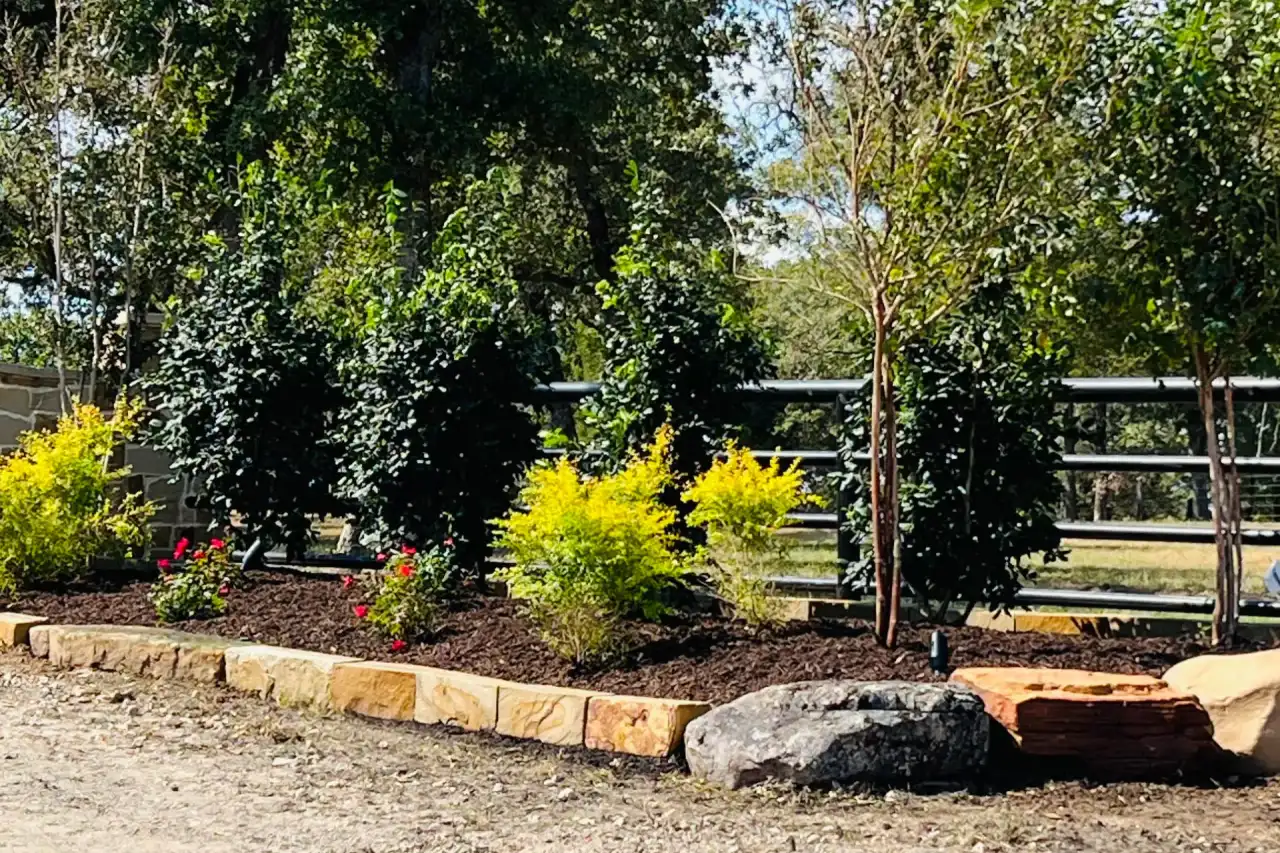
A tree is the highest-return plant you will ever put in a Brazos Valley landscape. Done right, it adds shade that cuts cooling costs, structure that anchors the whole yard, and value that compounds for decades. Done wrong, it is an expensive disappointment that struggles for a few years and then declines. The difference often comes down to two things most people get backwards: when they plant, and how.
Why Fall Is the Best Time to Plant a Tree Here
Fall Planting: Building Roots
When you plant in fall, the air is cooling but the soil stays warm for months — exactly what roots need to grow. The tree spends fall and our mild winter quietly building a root system with no demand to push leaves or survive heat. By the next summer, it has had nearly a year to establish roots that can actually find and move water.
Spring Planting: Fighting to Survive
A spring-planted tree goes in the ground with a small root system and then, within weeks, must support a full flush of new leaves and survive brutal Texas heat simultaneously. It spends its entire first year fighting rather than establishing, needs far more supplemental water, and suffers a much higher failure rate.
The fall-planted tree is building reserves while the spring-planted one is just trying not to die. That head start is the entire reason fall planting produces stronger, more resilient trees here.
Choosing a Tree That Belongs in the Brazos Valley
The second half of tree success is choosing a species suited to our specific conditions: intense heat, heavy and often alkaline clay soil, periodic drought, and the occasional hard freeze. A tree bred for a cooler, wetter, better-drained climate will always work against the site here, no matter how well it is planted.
Proven Performers for Our Area
Large Shade Trees
Live oak is the regional workhorse — slow but extraordinarily long-lived and tough. Cedar elm and Shumard red oak handle our clay and heat well, with the Shumard adding real fall color. Bur oak and chinkapin oak are excellent natives for larger properties.
Medium & Smaller Trees
Texas red oak, Mexican plum, and the native Texas redbud bring scale and seasonal interest. Crape myrtle remains a dependable small flowering tree for our summers. Choose among these by matching the mature size and form to the spot and purpose: shade, screening, or accent.
Right Tree, Right Place
Even a perfect species fails in the wrong spot. Think about the tree at its mature size — not the size in the pot. A live oak eventually needs room away from the house, foundation, driveway, and overhead lines. Plan location with the mature tree in mind, considering sun, structures, pavement, and what is underground.
How to Plant a Tree So It Lasts
Planting Depth Is Everything
The most common reason trees decline is planting too deep. The root flare — where the trunk widens and first main roots branch out — must sit at or slightly above the soil line, never buried. Trees planted too deep slowly suffocate and girdle over time. Often the root flare is already buried in the nursery container, so find it and plant to it, not to the top of the pot soil.
The Hole and the Backfill
Dig the hole wide — two to three times the width of the root ball — but no deeper than the root ball itself, so the tree sits on undisturbed soil and cannot settle and sink. On heavy clay, roughen the sides to help roots penetrate. Backfill mostly with native soil so roots learn to grow in the ground they actually live in. Water backfill in to settle air pockets.
Mulch and Water
Mulch a wide ring two to three inches deep over the root zone, kept well back from the trunk — never piled against it. Water deeply but infrequently: a slow, thorough soaking repeated as the soil begins to dry, not on a daily schedule. Deep, infrequent watering drives roots down. Frequent light watering keeps them shallow.
Frequently Asked Questions
Isn't spring the natural time to plant a tree?
It feels that way, but in the Brazos Valley fall is better. Fall planting gives the tree months of cool-season root growth before summer, while spring planting forces the tree to establish and survive heat at the same time. Fall-planted trees have higher survival and need less water.
Can I plant a tree in the heat of August?
Large trees are better held for the cooler weeks of fall, since transplant shock in peak heat is hard on them. August is best used to choose the tree and the location and to prepare, so the actual planting lands in the ideal fall window once temperatures ease.
Why do some trees slowly die years after planting?
The most common hidden cause is planting too deep, with the root flare buried, which slowly suffocates and girdles the tree over several years. Improper watering and the wrong species for the site are the other usual culprits. Getting depth, species, and watering right at planting prevents that slow decline.
How long until I need to water less?
A fall-planted tree generally needs regular deep watering through its first full year, tapering as it establishes, with the heaviest attention during the first summer. Because fall planting front-loads root growth in cool weather, that first summer is far less demanding than it would be for a spring or summer planting.
The Bottom Line
A tree is a decades-long investment, and the two decisions that most determine whether it thrives are when you plant and how. In the Brazos Valley, plant in fall so the roots establish before summer, choose a species suited to our heat and clay, and get the planting depth, hole, mulch, and watering right. Use August to choose the tree and the spot, and you set up a tree that pays you back in shade, structure, and value for the life of your property.
Ready to Add a Tree to Your Property?
We are glad to walk the property, recommend the right species for your soil, sun, and space, and plan a fall planting that gives it the best possible start. We will tell you honestly which trees belong on your site and which to avoid.
We serve Bryan, College Station, and the Brazos Valley.