Mulch vs Rock Beds in Texas Heat: Which Wins for Cost, Maintenance, and Plant Health?
Greener Lawnscapes • June 2026 • Bryan/College Station, TX
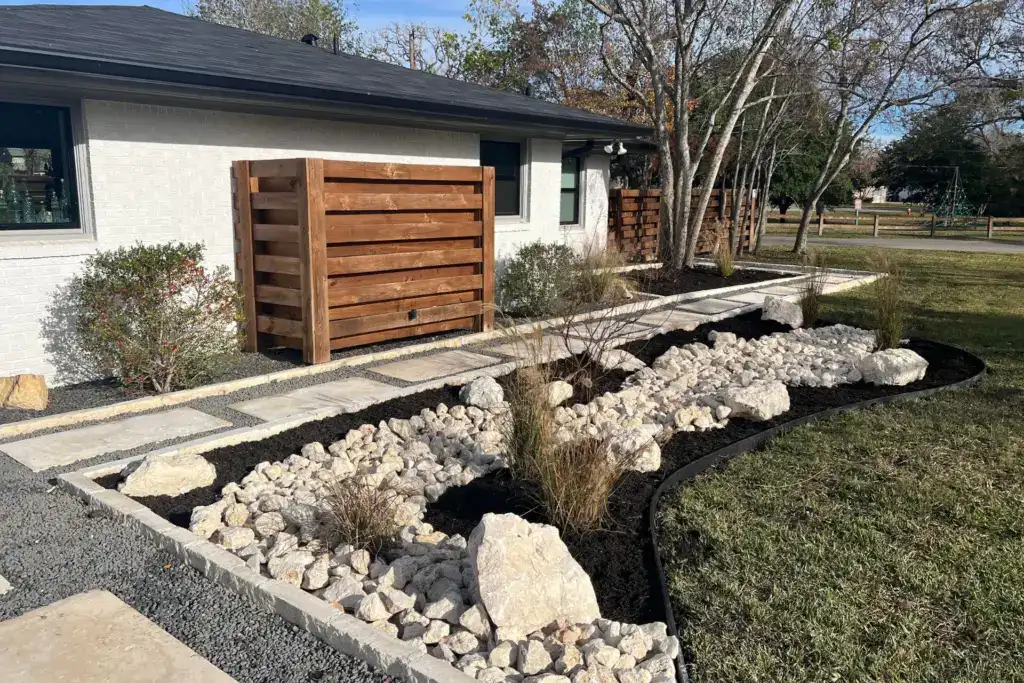
Short Answer: Over a 5-year horizon in Brazos Valley landscapes, mulch is dramatically better for plant health, soil biology, and water retention. Rock beds are better for low maintenance and longevity but actively harm most plants by raising soil temperatures, blocking nutrient cycling, and reflecting heat upward. The right answer for most plant-focused beds is mulch.
The Honest Answer About Rock Beds
If you have driven through any Brazos Valley neighborhood in the last 5 years, you have seen the trend toward rock beds replacing mulch. The pitch is appealing: install it once, never refresh it, no annual mulch trips, no rotting wood, no insects in the bedding material. For a lot of homeowners, that sounds like the answer.
The honest answer is more complicated. Rock beds are not better than mulch beds in most situations. They are different, with specific tradeoffs that hurt plant health in ways homeowners often do not realize until 2 to 3 years after installation.
What Mulch Does Underground
Quality organic mulch (hardwood, pine bark, cedar) does several things at once for the soil and plants underneath.
Retains Moisture
Mulch reduces evaporation from soil by 50 to 70 percent. Watering goes further, soil stays moist longer between waterings, and plant root systems do not experience the moisture swings that stress them.
Moderates Soil Temperature
Mulch insulates soil from extreme heat in summer and extreme cold in winter. Root zones under 3 inches of mulch run 10 to 15 degrees cooler in summer than bare soil.
Adds Organic Matter
The bottom layer of mulch breaks down into the soil over 2 to 3 years, gradually building organic matter and improving soil structure.
Supports Soil Biology
The microorganisms, beneficial nematodes, mycorrhizal fungi, and earthworms that make soil productive thrive under mulch.
Suppresses Weeds
Mulch blocks light to weed seeds and prevents most germination. Weeds that do come up are easy to pull because their roots are in soft mulch rather than packed soil.
What Rock Does Underground
Rock beds (river rock, decomposed granite, crushed stone) interact very differently with the soil below.
Increases Soil Temperature
Rock absorbs and stores solar heat during the day, then radiates it both upward and downward into the soil. Root zones under rock can run 5 to 15 degrees hotter than soil under mulch.
Reduces Moisture Penetration
Rock does not absorb water. Rain often runs off rock beds rather than soaking in, especially when the rock has settled and compacted.
Inhibits Nutrient Cycling
Without organic matter being added, soil under rock gradually depletes. Plants must be heavily fertilized to compensate. Soil biology is generally less active and less diverse.
The 5-Year Cost Comparison
Mulch Beds
Initial install: ~$1.50–$3/sq ft
Refresh every 2 years: ~$0.50–$1/sq ft
5-year total: ~$2.50–$5/sq ft
Rock Beds
Initial install: ~$4–$8/sq ft (2–3× more expensive upfront)
Annual weed control + barrier replacement
5-year total: ~$4.50–$9/sq ft
Mulch wins on cost over 5 years in most cases. Rock starts to win on cost over a 15 to 20 year horizon if you do not need to replace the weed barrier.
The Plant Health Comparison
This is where the gap is largest. Plants in mulch beds consistently outperform plants in rock beds across several dimensions.
Growth Rate
Plants in mulch grow noticeably faster because their roots have access to better soil conditions.
Heat Tolerance
Plants in mulch handle Texas summer better because their root zones run cooler and moister.
Disease Resistance
Plants in rock are more stressed, and stressed plants are more susceptible to disease.
Longevity
Plant lifespan is 20 to 40 percent shorter in rock beds compared to mulched beds across many common landscape species.
Where Rock Actually Wins
To be fair, rock has legitimate uses. Several specific applications where rock is the right choice:
High-Traffic Transition Areas
Walkways, areas between flagstone, transitions from lawn to bed. Rock holds up to foot traffic better than mulch.
Xeriscapes with Native Plants
Some natives (yucca, agave, certain cacti) actually prefer the hot dry conditions rock creates. For these plants, rock is appropriate.
Drainage Features
French drain top layers, dry creek beds, drainage swales. Rock handles water flow better than mulch.
Pet-Heavy Areas
Rock survives dog use better than mulch and is easier to clean.
Hybrid Approaches That Work
For most residential properties, the best answer is often a hybrid. Mulch the plant-focused beds where plant health matters. Use rock for paths, transitions, drainage, and areas where plants are not the priority.
Specific applications we have used successfully: river rock as a 2-foot border between lawn and mulched beds (creates a clean transition and accommodates edge maintenance), decomposed granite paths through mulched beds, rock in low spots that collect water, mulch for everything else.
What If You Already Have Rock Beds?
If you have inherited rock beds that are stressing your plants, conversion is possible but labor-intensive. Removing rock, restoring soil quality with compost amendment, and installing mulch typically costs $4 to $8 per square foot. For beds with significant plant value, the investment usually pays back in plant health within 2 to 3 years.
If full conversion is not feasible, partial improvement is possible. Pull rock away from plant stems and crowns to expose 6 to 12 inches of soil around each plant. Mulch that area heavily. The plant gets some of the mulch benefits while you keep most of the rock aesthetic.
What Reformed Rock-Bed Customers Tell Us
Year 1: plants noticeably less stressed during summer. Year 2: plants growing faster and looking healthier than they did in the rock era. Year 3 and beyond: customers say they wish they had switched sooner. The downside customers mention is the labor of refreshing mulch every 2 years — honest answer: that labor is real, but the tradeoff of healthier plants and lower fertilizer costs typically more than compensates.
Frequently Asked Questions
Does the weed barrier under rock help with weeds?
For the first 1 to 2 years, yes. After that, organic debris accumulates on top of the barrier and weeds germinate in that layer. Long-term weed control in rock beds is harder than in mulch beds, not easier.
What about colored rubber mulch?
Rubber mulch does not break down, does not add organic matter, and has been associated with concerns about chemistry leaching into soil over time. We do not recommend it for plant-focused beds.
How thick should mulch be?
2 to 3 inches in established beds. Avoid piling mulch against tree trunks or plant stems — the volcano mulching mistake.
What is the most maintenance-friendly mulch?
Shredded hardwood and pine bark are durable and look good for 18 to 24 months between refreshes. Cedar lasts longer but costs more.
Ready for a Professional Assessment?
If you want a professional read on whether mulch or rock makes sense for specific areas of your landscape, we are glad to walk the property with you and put together a recommendation. We will be straight about which approach fits each area.
We serve Bryan, College Station, and the Brazos Valley.